
The Radiology Partners (RP) NMMI Radiology National Subspecialty Division (NSD) presents our newest Rad to Rad Learning case.
Peer Learning Opportunity

Bone scintigraphy is used in staging and restaging metastatic disease. However, it also provides information regarding renal function in oncology patients.
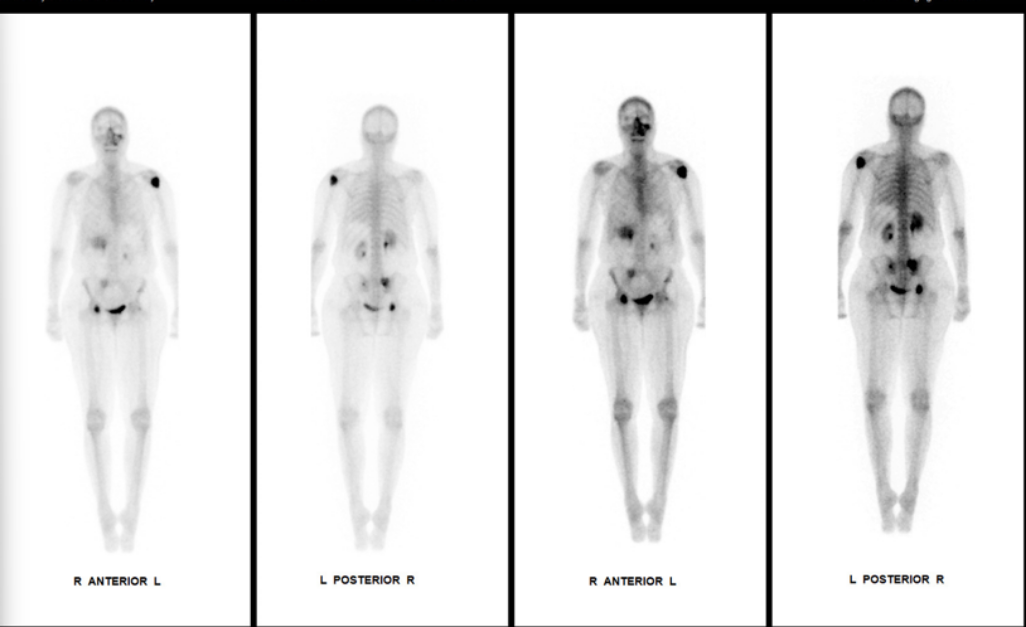
In the example below, osteoblastic osseous metastases are seen to the pelvic bones and left humerus. Additionally, asymmetric activity is noted to the right kidney in cortical morphology relative to the left kidney.
Shared to improve patient safety and healthcare delivery in the provision of radiology services. The circumstances and facts are changed, altered, or deidentified to preserve confidentiality. Privileges have not been waived.
Practical Insights

-
- Asymmetric unilateral or bilateral renal uptake, also known as “Hot Kidney signs”, typically suggests underlying metabolic or systemic etiologies.
- The most common etiology in oncology patients is nephrotoxicity secondary to chemotherapy or other medication.
- Other etiologies for this finding include hypercalcemia and cirrhosis.
- In rare instances, increased renal uptake can be seen with aluminum breakthrough from radiotracer generator production.
Takeaway: Bone scan provides similar physiologic information on renal function as a renogram.
 Takeaway: Bone scan provides similar physiologic information on renal function as a renogram.
The NMMI Radiology National Subspecialty Division (NSD) is part of RP’s Clinical Value Team, which works to elevate patient care and enhance value through innovation, collaboration and education. To advance this goal, our radiologists and advanced practice providers are committed to sharing peer learning as valuable reminders and insights about what we encounter in our day-to-day practice. Check back here and on X, LinkedIn and Instagram to see these common cases and our findings.
Visit the Clinical Resources page for more cases and to see what we’ve developed to enhance best practice recommendations, elevate image quality and patient care and update current standards throughout RP’s network of practices, all to deliver excellent radiology services to patients, referring clinicians and client partners.
Radiology Partners, through its owned and affiliated practices, is a leading physician-led and physician-owned technology-enabled radiology practice in the U.S. For the latest news from RP, follow us on X, LinkedIn, Instagram, YouTube and the blog.