RP’s Body Imaging National Subspecialty Division (NSD) presents our newest Rad to Rad Learning case.
Dr. Krishna Nallamshetty
The Body Imaging NSD is part of RP’s Clinical Value Team, which works to elevate patient care and enhance value through innovation, collaboration and education. To advance this goal, our radiologists and advanced practice providers are committed to sharing peer learning as valuable reminders and insights about what we encounter in our day-to-day practice.
Check back here and on X, LinkedIn and Instagram to see these common cases and our findings.Visit the Clinical Resources page for more cases and to see what we’ve developed to enhance best practice recommendations, elevate image quality and patient care and update current standards throughout RP’s network of practices, all to deliver excellent radiology services to patients, referring clinicians and client partners.
Radiology Partners, through its owned and affiliated practices, is a leading physician-led and physician-owned radiology practice in the U.S. For the latest news from RP, follow us on X, LinkedIn, Instagram, YouTube and the blog.Shared to improve patient safety and healthcare delivery in the provision of radiology services. The circumstances and facts are changed, altered, or deidentified to preserve confidentiality. Privileges have not been waived.
Rad to Rad Learning: Fracture of Ankylosed Spine
RP’s Neuroradiology National Subspecialty Division (NSD) presents our newest Rad to Rad Learning case.
The Neuroradiology NSD is part of RP’s Clinical Value Team, which works to elevate patient care and enhance value through innovation, collaboration and education. To advance this goal, our radiologists and advanced practice providers are committed to sharing peer learning as valuable reminders and insights about what we encounter in our day-to-day practice.
Check back here and on X, LinkedIn and Instagram to see these common cases and our findings.Visit the Clinical Resources page for more cases and to see what we’ve developed to enhance best practice recommendations, elevate image quality and patient care and update current standards throughout RP’s network of practices, all to deliver excellent radiology services to patients, referring clinicians and client partners.
Radiology Partners, through its owned and affiliated practices, is a leading physician-led and physician-owned radiology practice in the U.S. For the latest news from RP, follow us on X, LinkedIn, Instagram, YouTube and the blog.Shared to improve patient safety and healthcare delivery in the provision of radiology services. The circumstances and facts are changed, altered, or deidentified to preserve confidentiality. Privileges have not been waived.
Rad to Rad Learning: Abdominal Free Air
RP’s National Patient Safety Committee presents our first Rad to Rad Learning case.
The National Patient Safety Committee is part of RP’s Clinical Value Team, which works to elevate patient care and enhance value through innovation, collaboration and education. To advance this goal, our radiologists and advanced practice providers are committed to sharing peer learning as valuable reminders and insights about what we encounter in our day-to-day practice.
Check back here and on X, LinkedIn and Instagram to see these common cases and our findings.Visit the Clinical Resources page for more cases and to see what we’ve developed to enhance best practice recommendations, elevate image quality and patient care and update current standards throughout RP’s network of practices, all to deliver excellent radiology services to patients, referring clinicians and client partners.
Radiology Partners, through its owned and affiliated practices, is a leading physician-led and physician-owned radiology practice in the U.S. For the latest news from RP, follow us on X, LinkedIn, Instagram, YouTube and the blog.Shared to improve patient safety and healthcare delivery in the provision of radiology services. The circumstances and facts are changed, altered, or deidentified to preserve confidentiality. Privileges have not been waived.
Why RP? A Q&A with Dr. Syam Reddy, Body and Breast Radiologist
Dr. Syam Reddy, National Subspecialty Lead for Body Imaging at Radiology Partners (RP), discusses RP’s focus on delivering quality care and enhancing patient and client experiences while leading innovation in AI and technology.
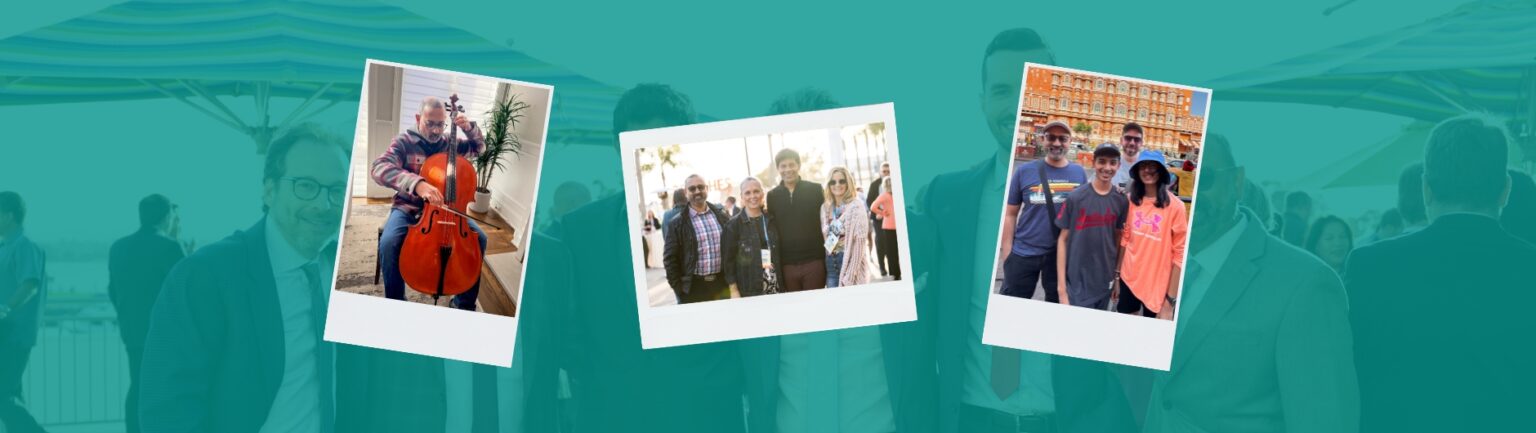
Dr. Syam Reddy is the National Subspecialty Lead (NSL) for Body Imaging at RP. A body and breast radiologist and practice president at RP Chicago, he and his practice joined RP in 2014. He is the clinical chair at UChicago Medicine Ingalls Memorial and a member of several physician support boards, as well as a facilitator for coaching circles. He holds memberships in the Chicago Radiologic Society, Breast Imaging American College of Radiology (ACR) Data Science Institute, ACR CT colonoscopy committee, the ACR HR Commission, Society of Cardiovascular CT (SCCT) and Society of Cardiovascular MR (SCMR). Outside of work, Dr. Reddy enjoys spending time with family – traveling, playing tennis with his kids, and learning the cello.
We talked to Dr. Reddy about his role with RP’s Clinical Value Team as NSL for Body Imaging, RP’s commitment to quality and innovation, the role of collaboration and AI in advancing subspecialty practice, and his excitement about leveraging imaging technology like MosaicOS™.
What inspired you to be a radiologist?
The biggest reason is my mom was a radiologist. Towards the end of her career, teleradiology was becoming more common. She had this monstrous screen she would have to bring home, and I saw her read these head CTs that took forever to load. That inspired me to see the mix of computers and medicine and how they meld together to help the patient. The more I learned about it, I was drawn to the fact that it’s almost like looking at artwork, trying to decipher what’s going on and putting all the pieces together – you’re a little bit of a detective, too. I also like my hands in a little bit of everything, and I found radiology to be a field that really covers all the specialties to a great extent.
What drew you to body imaging as a subspecialty?
I like body imaging because it’s so integrated with everything – from ER to developing subspecialties. I also got involved with breast imaging quite a bit, so those are the two areas I focused on. I really enjoy learning, and in radiology, there are always new updates, information and trials.
Talk about your decision to join RP.
Our group was one of the earliest groups to join RP, way back in 2014. At the time, we were a fairly large group, with about 100 radiologists across four or five states. Our group landed with RP because of their focus on quality. RP’s mission to transform radiology includes improving quality, patient experience and client-side experience, which drew our attention. That’s exactly what we wanted. Being a physician who can be integrated and involved with that process is really meaningful.
Talk about the change and growth you’ve seen within RP since you joined in 2014.
Looking back, I think RP has positioned itself as a practice that’s ahead of the curve in several ways. We’re the ones helping the rural areas that can’t get help. We’re working with reimbursement issues to ensure physicians are getting reimbursed properly to maintain their practices. And we’re the practice that’s ahead of the curve when it comes to AI and technology. I see a lot of vendors coming out, but I don’t know how many are radiology-driven with the input that we have and the speed at which we are progressing. All of those really speak volumes about what we are doing, what we have done and where we’re going.
What was your path to serving on our Clinical Value Team as the National Subspecialty Lead (NSL) for Body Imaging?
I started out being on the subspecialty advisory board. After a couple years, our previous NSL decided to explore other opportunities and asked me if I wanted to get involved. I thought it was a good way to get further into the subspecialty. I was nervous at first, but it was fun to jump in and meet everybody in the body imaging group. I’ve really enjoyed meeting other people in the practice and seeing all the things that we’ve developed over the years. I think there’s so much more potential – just the vastness of radiology really needs guidance for all these subspecialty exams that we do. There’s so much information out there.
What has been the most rewarding aspect of your NSL work?
I think sometimes we can get somewhat siloed, even within our own groups. When we come together in our advisory boards and discuss topics like trauma, we’re all on the same page. Those conversations give us the chance to say, “We do that too,” “This is how we do it,” “This is a great idea,” or “Maybe we can tweak it this way.” That sharing of ideas is so powerful. It’s great knowing there are so many resources out there and different ways to connect with people. And then there’s the challenge of pulling information together in a concise way. There are so many books and articles, so you have to dig through information. We need to get to a point where everything is very concise and easy to access, because that’s the way of the future.
Talk about the “Rad to Rad” peer learning program. What is it and what’s the goal of it?
When we think of our residents and fellows, a lot of information today is short-form – quick snippets like a one- or two-minute video on YouTube or a one-pager. With that in mind, we created the “Rad to Rad” peer learning program. It’s simple: share a couple of images from an important case and highlight the most valuable points. It’s super easy, super quick and very high yield. That’s the kind of content people are seeing on social media when it comes to radiology cases. Our hope is that it draws the attention of residents and fellows – and also keeps all of us engaged. We’re all busy, but if we can take a minute or two to see a case that boosts our confidence or helps avoid a mistake, it’s worth it.
How do you and the Clinical Value Team come together to create “Rad to Rad” learnings?
All of us are exposed to different cases in our practice, and some of them stand out. For example, maybe it was a miss, or maybe it was a great catch. I think most of us have a process where we document that, whether it’s a teaching case or something else, and we’re all very passionate about our desire to showcase our subspecialty. Those are the kind of cases we present to each other in our board meeting when we’re working on this. It’s kind of a working meeting; we’ll share the case, and then people will bring up some pointers, verify if it looks accurate, etc. Being able to create that is rewarding by itself.
Why is a team like the Clinical Value Team so integral to the rapid technology changes?
We’re all racing to get our work done, but we need someone to pause and make sure we’re running in the right direction. Sometimes speed without guardrails or guidance can lead to chaos pretty quickly. RP’s Clinical Value Team provides a forum that allows us to still move fast, but in the right direction, and ensure we’re doing it safely for our patients and the radiologists. That is so important. Our radiology societies play a similar role by ensuring new information and literature reach radiologists, so the quality of practice is always improving. Medicine is changing so quickly, and so is technology.
How would you define a successful future?
It seems like there’s this ever-growing gap between the volumes of work and the supply of radiologists. One of the things we’re focusing on is AI and how we can integrate it with radiologists to improve the whole process. To me, success would be all of that coming to fruition: leveraging AI while maintaining our quality and improving patient care. If we’re able to see all those things happen, that’s true success – no question.
You are an early user of Mosaic Clinical Technologies™. What has your experience been so far?
My background is in biomedical engineering, and the biggest decision I had to make was whether to go into computers or medicine. The reason I didn’t go into computers is that I tend to obsess about trying to get things right. That’s why I enjoy working with MosaicOS™ – I like creating and understanding. It’s very early, but the concept of telling AI to handle tasks like calculating volumes or percent changes is just incredible. I used to do all of that manually with a calculator. What I really want to know is how far I can push the envelope. There are people who know more than I do, and I’m excited to learn from them. I think we’re headed in the right direction, and it’s going to be pretty amazing.
How would you like AI to help support your specialty?
I’ve always felt the purpose of RP’s Clinical Value Team is to make it easier to practice in our subspecialty: being faster, more efficient and with high-quality content. As we become more subspecialized, our subspecialized referrers expect very specific content. If we can increase everyone’s skill set in that way, then I think we’re successful. There’s a shortage of body imaging radiologists and breast imaging radiologists; how do we use AI and the clinical value we provide to decrease the gap while increasing the number of people who are able to perform?
Dr. Syam Reddy earned his medical degree from the University of Illinois Medical Center in Chicago; completed his residency at Sparrow Health System; and completed his fellowship in body MRI imaging at Baylor College of Medicine in Houston.
Radiology Partners, through its owned and affiliated practices, is a leading physician-led and physician-owned radiology practice in the U.S. Learn more about our mission, values and practice principles at RadPartners.com. For the latest news from RP, follow along on our blog and on X, LinkedIn, Instagram and YouTube. Interested in learning about career opportunities? Visit our careers page.
Radiology Partners Leads the Way to Advance Excellence in Patient Care
Combining clinical expertise with data insights, the practice delivers open-access resources to elevate quality standards across the radiology field
(EL SEGUNDO, Calif.)Jan. 15, 2025 — Radiology Partners (RP), a leading radiology practice in the U.S. through its owned and affiliated practices, is advancing patient care by sharing evidence-based best practices, educational tools and clinically-focused resources to support the delivery of high-quality patient care across the specialty.
“Throughout 2024, our Clinical Value Team focused on opportunities for broad contributions to the specialty—a meaningful example of how we continue to transform radiology beyond our practice,” said Dr. Krishna Nallamshetty, Chief Medical Officer at RP. “The delivery of high-quality patient care is always our top priority, and we have a unique opportunity to harness the expertise of our radiologists and the innovative clinical technology solutions developed by RP to advance best practices resources for all radiologists in varying patient care settings.”
In support of its mission to transform radiology, RP is developing and sharing education tools with the radiology community with the aim of positively impacting healthcare delivery. These open-access clinical resources include the Rad to Rad Learning series and Clinical Pathway resources.
“Our Clinical Value Team is the ultimate advocate for patients, radiologists and the specialty, combining clinical expertise, innovative technology-driven processes and actionable data insights to elevate care,” said Rich Whitney, RP CEO and Board Chair. “The open-access resources developed and deployed throughout 2024 reflect our unwavering commitment to advancing quality care, fostering collaboration and delivering tangible value across the healthcare system—bringing our mission to life in a meaningful way.”
Current RP open-access clinical resources include:
Rad to Rad Learning Series: Throughout 2024, RP published 11 Rad to Rad Learning resources. These case-based learning modules include brief, focused tips from RP experts designed to offer practical insights on exams radiologists encounter in day-to-day practice. Rad to Rad Learning cases are shared across RP’s network of 3,900 radiologists and externally across social media channels to ensure accessibility across the entire specialty to elevate care delivery.
Best Practices for Breast Biopsy Clips: RP’s national subspecialty division for breast radiology created best practice guidance for breast biopsy clips. This resource includes guidelines for breast biopsy clip documentation, a breast clip education handout for patients and clip shape resources.
The Clinical Evaluation of AI Models: Introducing RP’s Five-Step Validation Process: RP’s AI experts created a five-step validation process for evaluating AI models. This comprehensive framework ensures the AI models RP deploys are deemed reliable and trustworthy by radiologists, enhance radiologists’ workflows and provide advanced insights to radiologists to further clinical quality and patient care. This clinical resource contains a summary outlining the five steps and corresponding video presentation describing these steps in further detail for fellow radiologists.
Best Practices for Neonatal Urinary Tract Dilation: Based on published data and consensus papers, RP’s national subspecialty division for pediatric radiology developed practical guidance for neonatal urinary tract dilation (UTD) with clear follow-up instructions for patients and referring clinicians, as well as a summary one-pager and sample radiology report template. The UTD classification system creates a standardized approach to evaluating the pediatric kidney and communicating the findings to the referring care team, helping improve patient care.
Practical Guidelines for Acute Stroke Care: Drawing from existing guidelines and the extensive expertise of the national subspecialty division for neuroradiology, RP released a Neuroradiology and Stroke Clinical Pathway, which offers practical guidance for acute stroke care. This Clinical Pathway offers operational insights for the entire stroke team, a triage checklist for nurses, imaging checklists for technologists and tips for interpreting radiologists.
Power of Collaboration: Revolutionizing Radiology Reports for Referring Physicians: To better serve referring physicians, RP redefined the delivery of radiology reports by creating and implementing report formats that better reflect the preferences of referring physicians. The practice utilized its network of radiologists to gather feedback, then deployed a set of three sample reports to nearly 600 referring clinicians across the country and asked them to rate the reports by: 1) Appearance, 2) Formatting, and 3) Satisfaction of the detail level included. From the feedback garnered, RP was able to pinpoint the report of preference for referring physicians and offers it as a free resource on the website today.
2024 marked the beginning for RP’s public clinical resources offerings. The practice will continue advancing its mission through the development and deployment of educational resources at scale, establishing best practices and building value across the specialty.
About Radiology Partners
Radiology Partners, through its owned and affiliated practices, is a leading radiology practice in the U.S., serving more than 3,400 hospitals and other healthcare facilities with high quality radiology, technology and artificial intelligence solutions. As a physician-led and physician-owned practice, our mission is to transform radiology by innovating across clinical value, technology, service and economics, while elevating the role of radiology and radiologists in healthcare. Using a proven healthcare services model, Radiology Partners provides consistent, high-quality care to patients, while delivering enhanced value to the hospitals, clinics, imaging centers and referring physicians we serve. Learn more at radpartners.com and connect with us at @Rad_Partners.


 Visit the Clinical Resources page for more cases and to see what we’ve developed to enhance best practice recommendations, elevate image quality and patient care and update current standards throughout RP’s network of practices, all to deliver excellent radiology services to patients, referring clinicians and client partners.