The Radiology Partners (RP) Interventional Radiology National Subspecialty Division (NSD)presents our newest Rad to Rad Learning case.
Peer Learning Opportunity
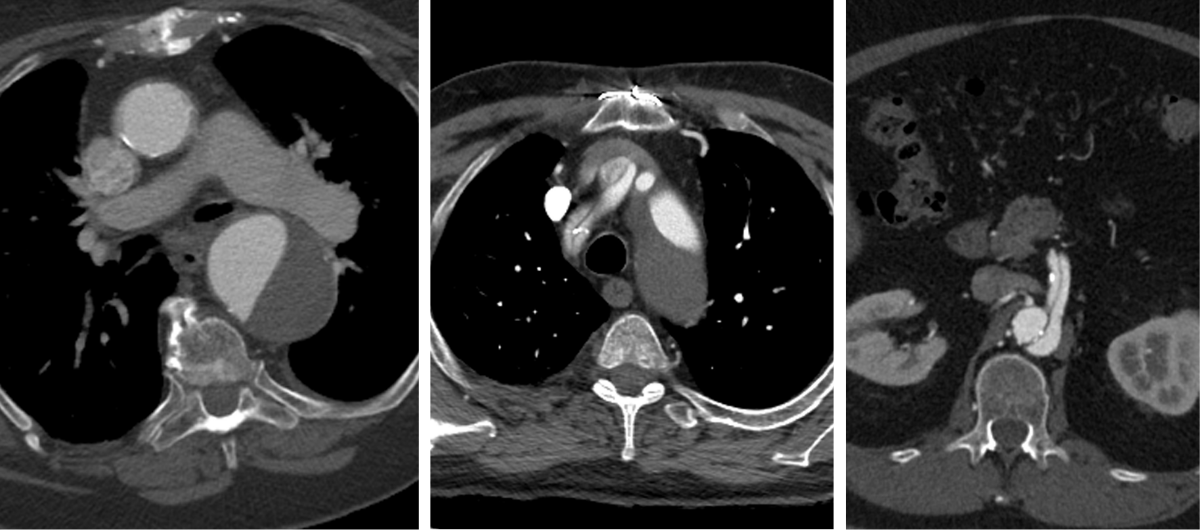
High-risk features should be identified and described to direct management (surgical, endovascular, or hybrid).
Report true / false lumen extension into coronaries, arch vessels, and visceral arteries.
Shared to improve patient safety and healthcare delivery in the provision of radiology services. The circumstances and facts are changed, altered, or deidentified to preserve confidentiality. Privileges have not been waived.
Takeaway: Accurate characterization of dissections improves survival.
The Interventional Radiology National Subspecialty Division (NSD) is part of RP’s Clinical Value Team, whichworks to elevate patient care and enhance value through innovation, collaboration and education.To advance this goal, our radiologists and advanced practice providers are committed to sharing peer learning as valuable reminders and insights about what weencounter in our day-to-day practice. Check back here and on X, LinkedIn and Instagram to see these common cases and our findings.
Visit the Clinical Resources page for more cases and to see what we’ve developed to enhance best practice recommendations, elevate image quality and patient care and update current standards throughout RP’s network of practices, all to deliver excellent radiology services to patients, referring clinicians and client partners.
Radiology Partners, through its owned and affiliated practices, is a leading physician-led and physician-owned technology-enabled radiology practice in the U.S. For the latest news from RP, follow us on X, LinkedIn, Instagram, YouTube and the blog.
Patient Save: Marie Currie’s story
Marie Currie, a multimedia artist, never expected a persistent cough to change the course of her life. As she focused on her craft, the cough wouldn’t go away, so she sought answers.
After extensive testing, she was diagnosed with pulmonary fibrosis, a serious condition that came with an uncertain future. Although the diagnosis was difficult, it set in motion a series of events that would ultimately save her life. As part of her care, Marie underwent routine imaging every few months to monitor the progression of her condition. During one of these scans, physicians identified a small abnormality — a tiny spot that would later prove critical.
When Marie’s care team noticed the lesion growing, she was referred to Dr. Sameer Rehman, a cardiothoracic and interventional radiologist at Desert Radiology in Las Vegas, Nevada, which is affiliated with Radiology Partners (RP). He specializes in advanced imaging of the heart and lungs and minimally invasive image-guided procedures, with focused special interest in diagnosing and treating lung cancer with thermal ablation. Marie’s underlying lung disease would make surgery risky, and after evaluating her case, Dr. Rehman recommended a minimally invasive approach: a combined biopsy and lung cryoablation procedure.
During the procedure, a biopsy confirmed the presence of lung cancer. In the same session, Dr. Rehman performed a cryoablation procedure, which involves the use of CT guidance to precisely place cryoablation probes into the tumor, creating an “ice ball” around the tumor and effectively destroying it while preserving surrounding lung function.
This approach reflects a growing shift in cancer care: using targeted, minimally invasive therapies to treat disease earlier, with fewer complications and faster recovery. For patients with underlying conditions like pulmonary fibrosis and emphysema, these options can be especially impactful.
Marie’s outcome was remarkable. Follow-up imaging at six months and one year showed no evidence of active cancer, only a small residual scar where the tumor had been treated.
“She has been cancer-free post-ablation now and has been doing clinically well,” Dr. Rehman said.
For Marie, the impact goes far beyond the medical result.
“I cannot stress enough to people that are in my situation that they need to know that this option is available for them, and I couldn’t be doing better,” she said. “I owe that procedure and his expertise my life, and I don’t believe that I would be here long for my grandson if it wasn’t for how blessed I was that this procedure was available at the time it was. And boy do I love being a grandma.”
Radiology Partners, through its owned and affiliated practices, is a leading physician-led and physician-owned radiology practice in the U.S. Learn more about our mission, values and practice principles at RadPartners.com. For the latest news from RP, follow along on our blog and on X, LinkedIn, Instagram and YouTube. Interested in learning about career opportunities? Visit our careers page.
Rad to Rad Learning: Endoleaks
The Radiology Partners (RP) Interventional Radiology National Subspecialty Division (NSD) presents our newest Rad to Rad Learning case.
Peer Learning Opportunity
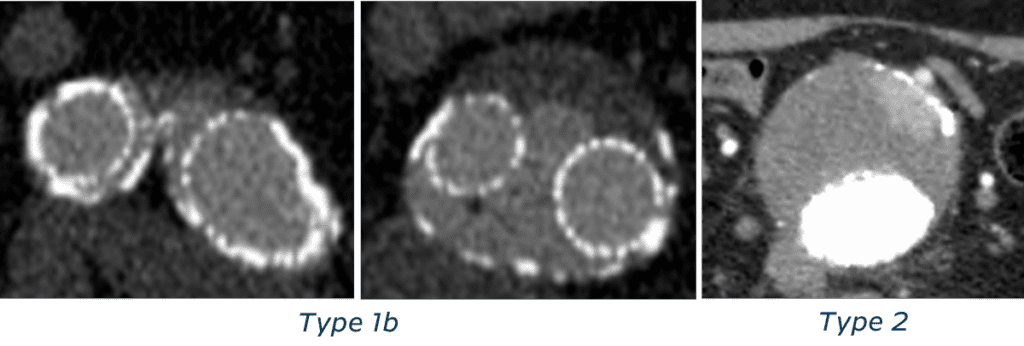
Classification of endoleaks drives critical management and follow-up.
Endoleaks
Type 1: Incomplete endograft seal and contrast tracking around the graft directly into the sac. Type 2: Retrograde flow of one or more branch arteries into the sac.
Shared to improve patient safety and healthcare delivery in the provision of radiology services. The circumstances and facts are changed, altered, or deidentified to preserve confidentiality. Privileges have not been waived.
Practical Insights
Type 1:
Type 1a = proximal seal.
Type 1b = distal seal.
Both high-risk, requiring urgent repair!
Type 2:
Most common.
Not urgent, but requires follow-up.
For >5mm growth over 6 months, treat with embolization.
Takeaway: type 1 endoleak is a critical finding!
The Interventional Radiology National Subspecialty Division (NSD) is part of RP’s Clinical Value Team, whichworks to elevate patient care and enhance value through innovation, collaboration and education.To advance this goal, our radiologists and advanced practice providers are committed to sharing peer learning as valuable reminders and insights about what weencounter in our day-to-day practice. Check back here and on X, LinkedIn and Instagram to see these common cases and our findings.
Visit the Clinical Resources page for more cases and to see what we’ve developed to enhance best practice recommendations, elevate image quality and patient care and update current standards throughout RP’s network of practices, all to deliver excellent radiology services to patients, referring clinicians and client partners.
Radiology Partners, through its owned and affiliated practices, is a leading physician-led and physician-owned technology-enabled radiology practice in the U.S. For the latest news from RP, follow us on X, LinkedIn, Instagram, YouTube and the blog.
Clinical Pathway: RP’s Clinical Value Team presents best practices for E&M service lines
Chris Davis, DMSc, PA-C, RT
Dr. Heath McCullough
Radiology Partners published an Evaluation & Management (E&M) Service Line Clinical Pathway.
Dedicated E&M service lines are a powerful way to enhance the continuity of care while strengthening the operational efficiency of radiology practices. These service lines can advance the patient experience, reinforce strong relationships with referring providers, improves overall satisfaction within interventional radiology (IR) teams, supports compliance with billing and regulatory requirements and helps ensure appropriate reimbursement for the services provided.
RP’s Advanced Practice Provider and IR National Subspecialty Division Advisory Boards collaborated on a Clinical Pathway on creating an E&M Service Line, exploring recommended structure, workflows and coding guidance.
Chris Davis, DMSc, PA-C, RT, serves as RP’s national subspecialty lead (NSL) for Advanced Practice Providers, and Dr. Heath McCullough serves at RP’s NSL for Interventional Radiology. They each partner with an advisory board made up of practicing APPs and radiologists to spearhead the development and implementation of programs with a mission to enhance clinical value and quality in imaging across RP. They focus on refining best practice recommendations, advancing image quality and aligning with the latest industry standards, all to deliver innovation and excellence in radiology services for patients, referring clinicians and client partners, and they share resources, like this clinical pathway, broadly so that all practices can deliver high-quality subspecialty care to patients in their communities.
Radiology Partners Clinical Value Team exists to elevate patient care and enhance value through innovation, collaboration and education. Radiology Partners, through its owned and affiliated practices, is a leading physician-led and physician-owned radiology practice in the U.S. For the latest news from RP, follow us on X, LinkedIn, Instagram, YouTube and the blog.
Shared to improve patient safety and healthcare delivery in the provision of radiology services. The circumstances and facts are changed, altered, or deidentified to preserve confidentiality. Privileges have not been waived.
Rad to Rad Learning: Active GI Bleed on CTA
The Radiology Partners (RP) Interventional Radiology National Subspecialty Division (NSD) presents our newest Rad to Rad Learning case.
Peer Learning Opportunity
Higher specificity and anatomic localization of CTA enhances speed and accuracy of GI bleed diagnosis.
Active GI Bleed on CTA
Arterial extravasation that increases on delayed phase is diagnostic of active bleeding.
Shared to improve patient safety and healthcare delivery in the provision of radiology services. The circumstances and facts are changed, altered, or deidentified to preserve confidentiality. Privileges have not been waived.
Practical Insights
CTA is exam of choice to diagnose acute GI bleeding – quickly replacing tagged RBC scans.
CTA protocol: No oral contrast, must include non con, arterial and venous phase imaging.
Non contrast imaging is key to avoid false positives.
Faster diagnosis = improved embolization success.
Multiphase CTA = Faster, more specific, better anatomic localization.
The Interventional Radiology National Subspecialty Division (NSD) is part of RP’s Clinical Value Team, whichworks to elevate patient care and enhance value through innovation, collaboration and education.To advance this goal, our radiologists and advanced practice providers are committed to sharing peer learning as valuable reminders and insights about what weencounter in our day-to-day practice. Check back here and on X, LinkedIn and Instagram to see these common cases and our findings.
Visit the Clinical Resources page for more cases and to see what we’ve developed to enhance best practice recommendations, elevate image quality and patient care and update current standards throughout RP’s network of practices, all to deliver excellent radiology services to patients, referring clinicians and client partners.
Radiology Partners, through its owned and affiliated practices, is a leading physician-led and physician-owned technology-enabled radiology practice in the U.S. For the latest news from RP, follow us on X, LinkedIn, Instagram, YouTube and the blog.
Why RP? A Q&A with Chris Davis, National Subspecialty Lead, Advanced Practice Providers
Chris Davis, National Subspecialty Lead for Advanced Practice Providers (APPs) at Radiology Partners (RP), discusses his journey and insights as a physician assistant (PA) specializing in interventional radiology, the unique roles and growth opportunities within the field and the support provided by RP.
Chris Davis, DMSc, PA-C, RT, is a PA in interventional radiology for RP Phoenix in Mesa, Arizona, where he also serves as adjunct faculty and preceptor for PA programs in the region. He is a fellow member of the American Academy of Physician Assistants and has served as a clinical associate member of the Society of Interventional Radiology, as well as past president of the Arizona State Association of Physician Assistants. He joined RP in 2007. Outside of work, he enjoys cycling, running and spending time with family.
We talked to Chris about his path to being a PA and how RP’s nationwide network, local adaptability and strong support for APPs allow him to make meaningful clinical and educational impacts.
Tell us why you wanted to pursue a career as a physician assistant?
While finishing my bachelor’s degree in biology at the University of Utah, I realized I didn’t want to be a biology teacher and needed a career that could support a family. Medical school was in the back of my mind, but I also wanted kids, and balancing school with parenting was going to be challenging. That’s when I discovered the PA profession. At the time, prior medical experience was strongly emphasized. We were living in Utah, and I found an affordable two-year X-ray tech program. I jumped in, gained hands-on experience and continued the PA path. After X-ray school, I worked for a couple years as an X-ray tech while applying to PA programs. Once I completed PA school, I found combining the medical knowledge from PA training with the imaging and positioning skills from RT school was the perfect blend. To me, it’s the best of both worlds.
What drew you to interventional radiology?
The interventional radiology component is a natural pathway for PAs who want to practice in radiology. I found most PAs who want to practice in radiology are hands-on; they’re the doers and the ones who get things done. And that’s me. As a PA in interventional radiology, you get to interact with the patients and help solve the problem. For example, if they’ve got a swollen knee or fluid around their belly, you get to help be part of solving the issue.
What’s fulfilling about working as an APP for RP?
Serving as National Subspecialty Lead for APPs at RP has been very fulfilling. It’s incredibly rewarding to look across the practice and help identify where APPs can make a meaningful impact – not just in enhancing the patient care experience but also in supporting our physician colleagues so they can have better experiences.
What are some unique features RP offers that are hard to find elsewhere?
It’s the nationwide scope. I’m involved in a few PA and nurse practitioner groups online, and I see great questions being asked. But often, those folks are in smaller practices without the internal network to turn to and say, “Hey, how do I do this?” or “I’m having this challenge – how do I solve this concern?” At RP, we have a large network of APPs across the country, which means we’ve seen the full range of challenges faced by APPs working in radiology, whether it’s fluoroscopy privileges or prescribing rights. We’ve already worked the problem, or we have other APPs in different states who have encountered it and can say “Here’s what I did when I was having that issue.” It’s that nationwide strength within RP that really is impressive. And yet, we still know each other – it feels personal. Sitting on the national council and the Clinical Value Team, we’re across the country and in different specialties, but in our monthly meetings, I’m just a regular guy. That’s pretty awesome.
Tell us more about your role as an educator and how that relates to your role as a National Subspecialty Lead for RP?
What’s interesting is when I started as a PA in radiology back in 2007, there were maybe seven or eight of us in the entire state of Arizona. Now I think we’re up to around 20. We’ve seen the profession grow, but it’s still pretty small. Because of that, we’re frequently asked to take students – and when they rotate with us, they start to see that this is a viable career path. It’s hands-on, and there’s a little bit of autonomy, because when you’re in the procedure, you’re the one making decisions. They are really drawn to that idea. I’ve had the opportunity to spread the gospel of IR to PAs and nurse practitioners here in the Phoenix Valley through teaching. Watching students come in for their four- to six-week rotations –initially overwhelmed by the technology, the imaging, the ultrasound machines – and then seeing that shift by the end, when they realize, “Hey, I can do this,” is incredibly gratifying. They go from intimidated to confident, hitting small lesions with precision. It’s about growing the profession, mentoring the next generation and showing them what’s possible in radiology. It’s fulfilling to help shape that journey both locally and nationally.
You’ve worked as a PA in radiology for 18 years. How has the field evolved, and what does the future look like to you? How will RP contribute to that?
There are a couple of things. First, the scope of what APPs can do in radiology has broadened. We’ve seen procedures where, once an APP gets a hold of it and is confident and skilled, they can take on that responsibility and relieve some of the burden from radiologists. That leads to greater efficiency, which is a huge benefit for RP overall—especially as we face a narrowing pipeline for both interventional and general radiologists. APPs can absolutely help fill that role. I suspect we’re going to see more APPs working in radiology, and that scope will continue to fulfill the needs of individual practices. What’s interesting about RP is, because it’s locally led, APPs can adapt to what the local practice needs. For example, here in the Phoenix area, our East Valley practice looks different from the West Valley—and that’s okay, because we’re able to adapt to the local needs of each group. This is similar in other places like North Carolina, Florida or Texas, where more clinical rounding is done. That’s just what the practice needs, and APPs are stepping up to meet those demands. That flexibility and responsiveness are what make the APP role so valuable within RP.
What are some common misconceptions about your work as a PA?
Many people don’t really understand what a PA is. The title “physician assistant” is starting to trend toward “physician associate.” That’s probably the biggest misconception. Another thing people don’t realize is radiology is a specialty. It’s a narrow one, but we touch every other specialty – neuro, ortho, you name it. Still, our touchpoints are limited, so when I say I’m a PA in radiology, people assume I work in a doctor’s office or maybe an ER, or they think I’m a radiologist or an X-ray tech. And yes, I’ve been an X-ray tech, but that’s not what I do every day. When people ask what I actually do, I give them this elevator pitch: I use an ultrasound machine, an X-ray machine or a CT machine to put a needle, a line or a tube somewhere in your body. And I always add: You never want to meet me professionally.
Chris Davis completed a radiologic technology (RT) program prior to completing a Master of Physician Assistant Studies (MPAS) at A.T. Still University, Arizona School of Health Science, in Mesa Arizona, where he also completed a Doctor of Medical Science (DMSc) with an emphasis in healthcare leadership.
Radiology Partners, through its owned and affiliated practices, is a leading physician-led and physician-owned radiology practice in the U.S. Learn more about our mission, values and practice principles at RadPartners.com. For the latest news from RP, follow along on our blog and on X, LinkedIn, Instagram and YouTube. Interested in learning about career opportunities? Visit our careers page.
Rad to Rad Learning: Renal Angiomyolipoma
The Radiology Partners (RP) Interventional Radiology (IR) National Subspecialty Division (NSD) presents our newest Rad to Rad Learning case.
Dr. Krishna Nallamshetty
The IR NSD is part of RP’s Clinical Value Team, whichworks to elevate patient care and enhance value through innovation, collaboration and education.To advance this goal, our radiologists and advanced practice providers are committed to sharing peer learning as valuable reminders and insights about what weencounter in our day-to-day practice.
Check back here and on X, LinkedIn and Instagram to see these common cases and our findings.Visit the Clinical Resources page for more cases and to see what we’ve developed to enhance best practice recommendations, elevate image quality and patient care and update current standards throughout RP’s network of practices, all to deliver excellent radiology services to patients, referring clinicians and client partners.
Radiology Partners, through its owned and affiliated practices, is a leading physician-led and physician-owned technology-enabled radiology practice in the U.S. For the latest news from RP, follow us on X, LinkedIn, Instagram, YouTube and the blog.Shared to improve patient safety and healthcare delivery in the provision of radiology services. The circumstances and facts are changed, altered, or deidentified to preserve confidentiality. Privileges have not been waived.
Rad to Rad Learning: Pulmonary AVM
The Radiology Partners (RP) Interventional Radiology (IR) National Subspecialty Division (NSD) presents our newest Rad to Rad Learning case.
Dr. Krishna Nallamshetty
The IR NSD is part of RP’s Clinical Value Team, whichworks to elevate patient care and enhance value through innovation, collaboration and education.To advance this goal, our radiologists and advanced practice providers are committed to sharing peer learning as valuable reminders and insights about what weencounter in our day-to-day practice.
Check back here and on X, LinkedIn and Instagram to see these common cases and our findings.Visit the Clinical Resources page for more cases and to see what we’ve developed to enhance best practice recommendations, elevate image quality and patient care and update current standards throughout RP’s network of practices, all to deliver excellent radiology services to patients, referring clinicians and client partners.
Radiology Partners, through its owned and affiliated practices, is a leading physician-led and physician-owned radiology practice in the U.S. For the latest news from RP, follow us on X, LinkedIn, Instagram, YouTube and the blog.Shared to improve patient safety and healthcare delivery in the provision of radiology services. The circumstances and facts are changed, altered, or deidentified to preserve confidentiality. Privileges have not been waived.
Why RP? Q&A with Dr. Steven Craig, Interventional Radiologist
Dr. Craig shares his journey to interventional radiology and how his military career helped prepare him for his leadership role with RP’s SEAL Team.
Dr. Steven Craig is an interventional radiologist and retired U.S. Army Colonel based in San Antonio, Texas. He is president of the RP SEAL Team, which provides on-site support to new practices that join RP, to ensure smooth integration and stabilization of services. Outside of work, he enjoys running, mountain biking and being on the water with his family. As the parents of two college athletes, he and his wife spend a lot of time traveling to watch their children compete. He joined RP in 2022, after a 24-year career in the U.S. Army.
We talked to Dr. Craig about his journey to interventional radiology (IR) and how his military career helped prepare him for his leadership role with RP’s SEAL Team.
Why did you choose radiology?
I had an amazing high school science teacher whom I credit with pushing me into medicine. I was in advanced placement anatomy or science in high school, and we had an anatomy lab. That’s what started my love for this type of work. Radiologists are basically anatomists. We’re doing the same thing, but instead of using a knife, we’re using a CT scanner or an X-ray machine. Fast forward to when I was in medical school, I had an excellent radiology professor. He made things interactive and exciting, and he instilled in us that radiologists are the doctor’s doctor. So, if a doctor means teacher, we’re the doctor’s teacher. When the other doctors have questions, they need answers –and they come to us. We canprovide those answers.That was really cool to me.
What led you to choose the Army? How did it shape your perspective on what you’re doing now?
I did not come from a military family, and it wasn’t really on my radar. I got married young and did not come from a family with a lot of money, and I was introduced to a gentleman who said he could help me pay for college. I joined ROTC, intending to do my four years and get out, since I needed help paying for college. I quickly realized this is absolutely something I enjoyed and was good at, and I liked being part of something bigger. The military is a large organization, and being part of something bigger than you is kind of satisfying. Fast forward, I took them up on the offer to pay for medical school, and I became a doctor while I was in the military. Every time the military offers to pay for school, they ask for more time, and I was glad to give it. By the time I was done with paying off the time I owed for my school, I was a colonel, and I was ready to retire. During the path along the way, I had so many leadership jobs and opportunities to go to different parts of the world.
What drew you to IR?
I can pinpoint the exact moment when that happened. I completed a couple of surgical rotations and was starting to question whether I should be a surgeon or if I was going in the right direction. Then I had an interventional radiology rotation, and on the first day, we did a groin access. We accessed somebody’s leg, put a catheter through their body and embolized an aneurysm in their face. That was my first day, and I was immediately like, “This is so cool. This is what I’m going to do for the rest of my life.”
How long have you been an interventional radiologist at this point and how do you find it now?
I had a career in the military before going into medicine, so I got a late start in medicine. I did my training in the military and became an interventional radiologist in 2015. I spent several years at Brooke Army Medical Center, which is a large level one trauma center, treating trauma, a lot of interventional oncology (I really love the interventional oncology side), teaching residents and occasionally teaching fellows and medical students.I think that set me up well for when I left the military, then I jumped right into the RP SEAL team and immediately into a leadership role. Now leadership is about half of what I do, and IR is the other half. I do miss the high-endIR work I was doing five years ago –I’mnot doing nearly as much now, but I think it’s a good balance.I’m enjoying the leadership side and get to do a little bit of both.
The military had some influence on the RP SEAL Team when it was developed. Tell as more about that, as someone who has served in the military.
At RP, SEAL stands for “secure, engage, align and lead,” and we focus primarily on operations and integration.I initially didn’t like that we were calling ourselves the SEAL team, but we did get buy–in from some high-ranking Marines who said, “Don’t just steal our name; itneeds to mean something.” And it does mean something. Wecall ourselves the integrations team andspecial ops, which also has a military connotation.That’show we see ourselves.When we partner with a local practice new to RP, it’sour SEAL Team radiologists who are there to offer the practice stability and continue providing high-quality patient care. We set the stage to make it easier for those who come behind us.That’s the same thing the U.S. Navy SEALs do. They’re the first ones in to do the hard work, and they set the stage for those who are going to come behind them.
Talk about your journey to joining RP and ultimately becoming president of RP SEAL.
In the last couple years of my military career, I was using my vacation time to practice through a locums agency. In 2019, I was reading ona diagnostic locums shift for an RP practice in El Paso, Texas, and Dr. Byron Christie, who founded the RP SEAL team, walked in and introduced himself. He told me about the SEAL team, and I thought, “that sounds like exactly what I’m looking for.” After 24 years in the Army, I wasn’t necessarily looking to sign a contract where I had to go to the same place to work every day. Immediately I said yes, but I still had two years left in the Army, so I took his phone number. A year later, I called him, and he said, “Yes, we still have a position for you.” I joined RP in 2021 as a SEAL member six. Six people wasn’t enough, so six became 10, 10 became 20 and so on. Now we’ve got more than 60 members.A few months ago, I stepped into the president role. My leadership training in the military has helped me in this role, and it’s been a good fit. I’m enjoying it.
What are some of the unique features RP offers that are hard to find elsewhere?
AllRP-affiliated practices are unique.For somebody from the outside looking for a job, we have something for you.No matter what it is you’re looking for, RP has it. You want to be in a tiny practice in a rural area? We have that. You want to be in a large city and work in an academic institution? We have that. You want to work remotely? You want to work on–site?Whatever it is you want to do, RP does all those things.
What excites you about the future of radiology at RP?
At RP, wecan invest in things affecting the entire industry. Right now, there are not enough radiologists in general, and there are not enough doctors to do the work. RP has invested in ways to enhance our workflows so we can better serve our patients and referring providers. Alot of that revolves around IT andAI. There are some amazing AI tools we‘ve invested in, and they make our jobs easier. I don’t thinkthe technology is going to replace us;it’s just going to make us better.
Dr. Steven Craig earned his medical degree from Uniformed Services University;completed his residency in diagnostic radiology at Brooke Army Medical Center; and completed his fellowshipin vascular and interventional radiology at UT Health San Antonio.
Radiology Partners, through its owned and affiliated practices, is a leading physician-led and physician-owned radiology practice in the U.S. Learn more about our mission, values and practice principles at RadPartners.com. For the latest news from RP, follow along on our blog and on X, LinkedIn, Instagram and YouTube. Interested in learning about career opportunities? Visit our careers page.
Rad to Rad Learning: Intramural Hematoma
The Radiology Partners (RP) Interventional Radiology National Subspecialty Division (NSD) presents our newest Rad to Rad Learning case.
Dr. Krishna Nallamshetty
The Interventional Radiology NSD is part of RP’s Clinical Value Team, which works to elevate patient care and enhance value through innovation, collaboration and education. To advance this goal, our radiologists and advanced practice providers are committed to sharing peer learning as valuable reminders and insights about what we encounter in our day-to-day practice.
Check back here and on X, LinkedIn and Instagram to see these common cases and our findings.Visit the Clinical Resources page for more cases and to see what we’ve developed to enhance best practice recommendations, elevate image quality and patient care and update current standards throughout RP’s network of practices, all to deliver excellent radiology services to patients, referring clinicians and client partners.
Radiology Partners, through its owned and affiliated practices, is a leading physician-led and physician-owned radiology practice in the U.S. For the latest news from RP, follow us on X, LinkedIn, Instagram, YouTube and the blog.Shared to improve patient safety and healthcare delivery in the provision of radiology services. The circumstances and facts are changed, altered, or deidentified to preserve confidentiality. Privileges have not been waived.



 Takeaway: Accurate characterization of dissections improves survival.

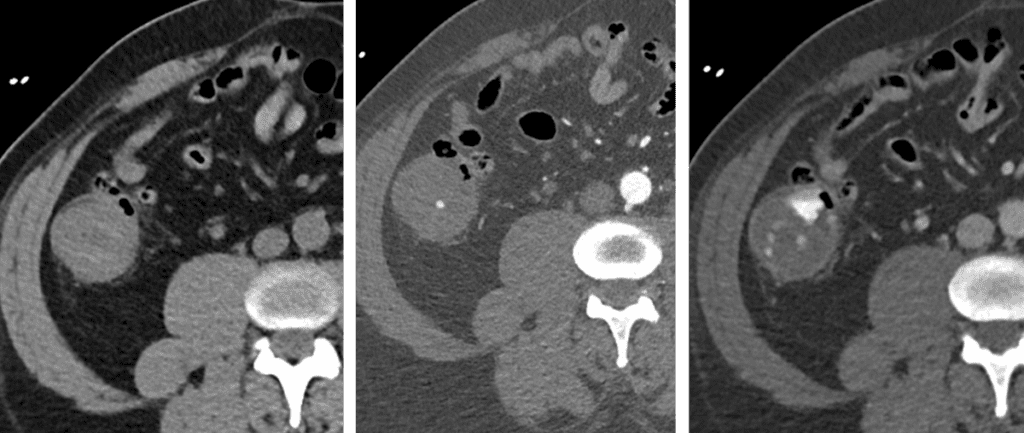 Shared to improve patient safety and healthcare delivery in the provision of radiology services. The circumstances and facts are changed, altered, or deidentified to preserve confidentiality. Privileges have not been waived.

 Visit the
  Visit the