Dr. Matthew Peterson

Why RP? A Q&A with Dr. Matthew Peterson, Interventional Radiologist

Dr. Peterson shares his thoughts on the benefits of a national radiology practice.

Dr. Matthew Peterson

Dr. Matthew Peterson

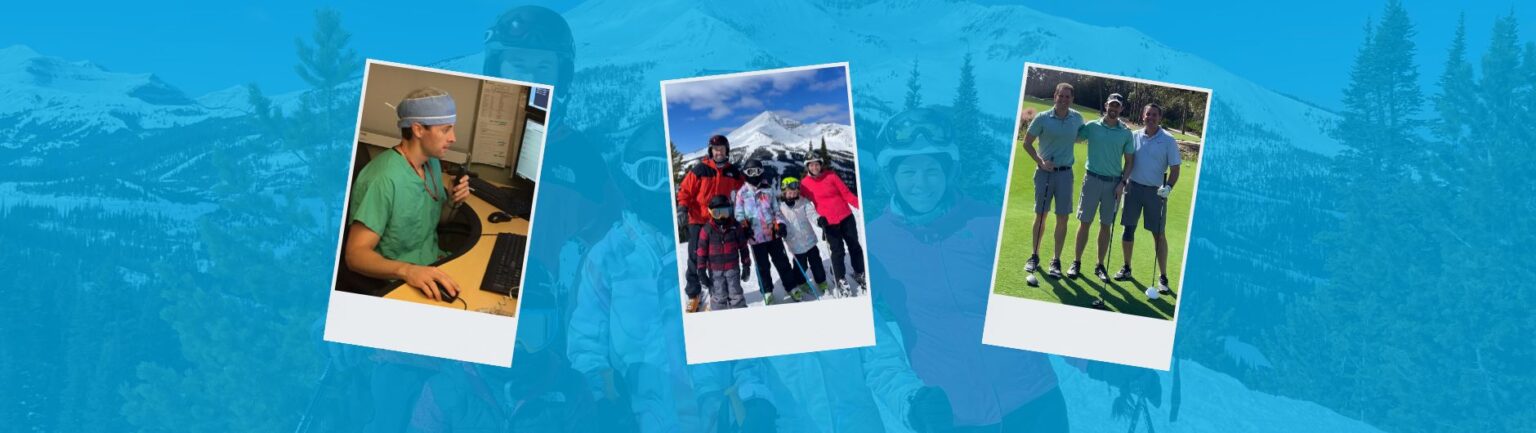
Dr. Matthew Peterson’s interventional radiology (IR) career spans two separate Radiology Partners affiliated practices. For the last two years, he has practiced in Sarasota, Florida, and prior, he served a practice in Columbus, Ohio. Currently, he is a member of RP’s physician recruiting support board, and he previously served on his local practice’s board. Outside of radiology, Dr. Peterson is married with three children and enjoys anything related to sports, especially golf and skiing. We talked to Dr. Peterson to learn more about his career and his experience with RP.

“With the benefits of a strong IT infrastructure, utilization of AI, adherence to best practice recommendations and a national platform that allows us to collaborate across a large network, I think Radiology Partners allows us to push the standard of what radiologists can offer to our patients and clients.” – Dr. Matthew Peterson

Why did you choose radiology?

I was exposed to IR during my third year of medical school. I already knew I wanted to do something surgical or procedure-based, and I found the use of imaging and minimally invasive techniques in IR fascinating, which drew me to radiology. As I learned more about the specialty, the ability to impact all parts of medicine interested me. To be a radiologist, you must be knowledgeable about so many different areas of medicine, and that challenge was what drove me to pursue radiology.

How did you connect with RP?

I have been with RP for much of my career. After my fellowship, I joined a private practice in Ohio. During my time there in 2016, our group partnered with Radiology Partners. Between serving on our local practice board and the RP recruiting support board, I developed a good understanding of how RP works with local practices and the value local practices and RP bring to each other. My family made the decision to relocate to Florida, and through the connections and friendships that I had made within RP, I was fortunate to relocate to another RP practice. My experience with RP has been very positive, and it was a goal of mine to stay within the practice.

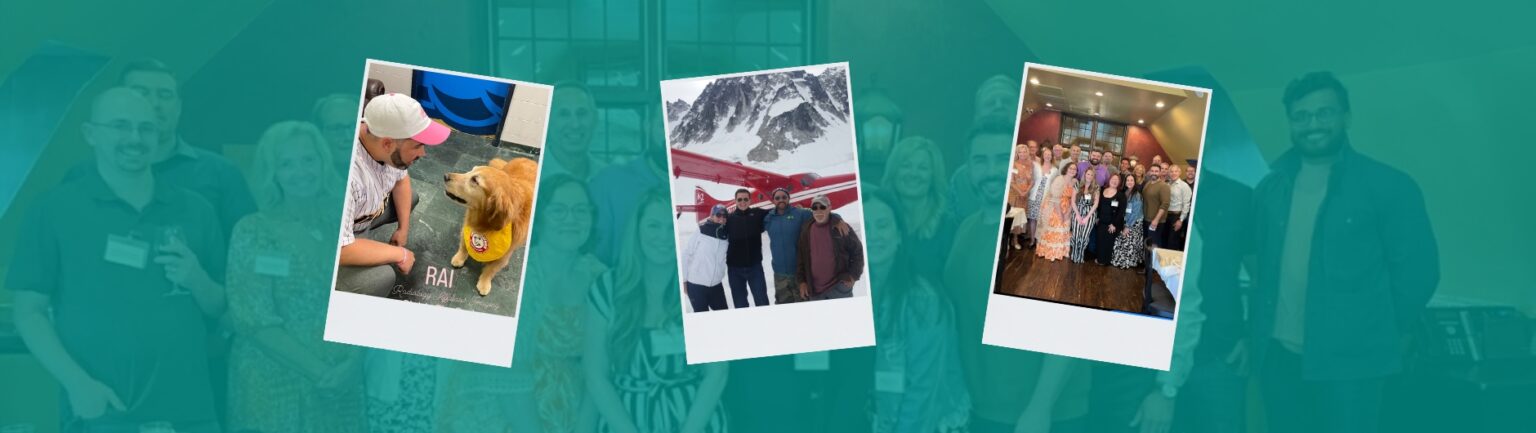
From left, RP radiologists Dr. Frank Castellano, Dr. Matthew Peterson and Dr. Tim Meier.

From left, RP radiologists Dr. Frank Castellano, Dr. Matthew Peterson and Dr. Tim Meier.

What excites you about RP?

My group joined RP early on in my career, when RP was also in its beginning stages. Much of the discussion was about how to make radiology better and how RP could accomplish that. As time went on, RP grew and delivered, turning those ideas into resources to make us a better practice and physicians. With the benefits of a strong IT infrastructure, utilization of AI, adherence to best practice recommendations and a national platform that allows us to collaborate across a large network, I think Radiology Partners allows us to push the standard of what radiologists can offer to our patients and clients.

What are some of the unique features that RP offers that are hard to find elsewhere?

I like to highlight to people that RP is a radiology practice that puts a strong emphasis on culture and physician engagement. RP has created educational courses to teach radiologists about healthcare business and administration so we can train our own physicians to help lead our practice. RP allows for numerous opportunities to be in leadership roles, such as local practice committees, hospital/medical directors, RP national boards and radiology advocacy groups. We have a lot of great physician leaders at RP, and there are lots of ways that interested radiologists can get involved.

How has your opinion of RP changed since joining the practice?

I did not know much about RP when our practices merged, but one of the circumstances where I saw a real impact of being with RP was during the Covid-19 pandemic. There was a lot of uncertainty in the world, with what was going on and what the future would look like. Although no one was able to predict how it would play out, RP leadership did a great job of identifying potential challenges, offering guidance and giving projections as to what to expect. The transparency of RP’s leadership provided a sense of confidence and stability, which allowed us as radiologists to remain focused on providing patient care. I do not think our group would have had the same experience had it not been for RP.

What does the future of radiology look like in five years? How will RP contribute to that?

There are trends in radiology that I think will continue. Healthcare continues to rely on imaging, and with a growing and aging population, radiologists will be pushed to find ways to be more efficient without sacrificing quality to keep up with demand. Physician recruiting and retention will be increasingly important for groups, and I think improving the work environment and job satisfaction for radiologists will be more of a focus. Reimbursement will remain tied to quality metrics and adherence to these measures will be important for groups to avoid financial penalties. These are areas that RP continues to examine and improve where able. Additionally, AI will continue to be at the forefront of our profession. In RP, we have already seen the implementation of AI technology to improve the quality of our reports in the past five years. RP is continuing to develop AI into a tool to help us perform our job better, which I think will have a growing impact on the interpretation of images in the future.

Dr. Matthew Peterson earned his medical degree from Loyola University in Chicago; completed his residency at Morristown Medical Center in Morristown, New Jersey; and completed a fellowship in vascular and interventional radiology at the University of Minnesota.

Radiology Partners, through its owned and affiliated practices, is a leading physician-led and physician-owned radiology practice in the U.S. Learn more about our mission, values and practice principles at RadPartners.com. For the latest news from RP, follow along on our blog and on TwitterLinkedIn,  Instagram and YouTube. Interested in learning about career opportunities? Visit our careers page.

Anisha Martin with family and coworkers

Why RP? A Q&A with Dr. Anisha Martin, Vascular and Interventional Radiologist

Dr. Martin shares about her journey to radiology, her passion to connect women trainees to her subspecialty and the support she is offered at RP.

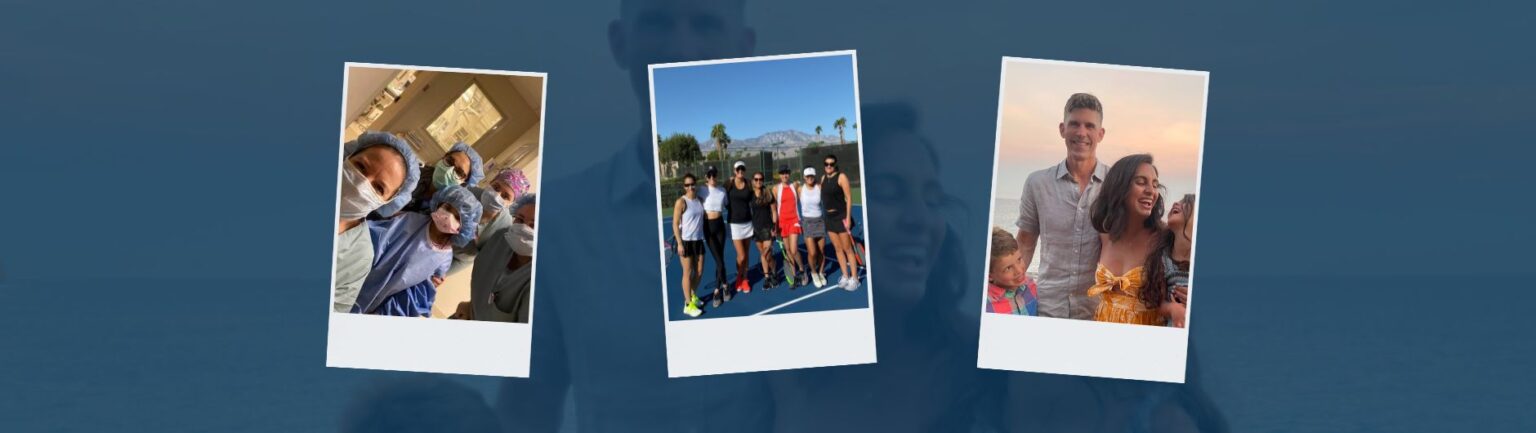
Dr. Anisha Martin is a vascular and interventional radiologist in Chicago and a member of Radiology Partners’ (RP) physician recruiting support board. She is passionate about helping female radiologists pursue interventional radiology (IR), a subspecialty traditionally comprising only ~34% women. She also values work-life balance, as a mother to two young children, wife, avid tennis player and world traveler. We talked to Dr. Martin to learn more about her career, advocacy for women in IR and experience at RP.

Why did you pursue radiology?

It was kind of a long road for me, in the sense it took me a few mental hurdles to get here. Originally, I applied to match with a general surgery residency, planning to be a trauma surgeon. My mentor was a surgeon, and she was pivotal in my decision to transition to radiology. I remember her saying to be a surgeon, surgery needs to be my only interest. However, I liked all of medical school and medicine in general. Radiology, specifically interventional radiology, allows me to have a hand in almost every part of the body and disease process while interacting with every type of subspecialty and physician, and IR allows me to keep up with the surgical life I was drawn to initially. I carry this message to other female physicians who may be interested in IR, and I help advance this important work through my involvement in Women in SIR and other forums that allow me to open doors for other female radiologists.

How did you connect with RP?

I have a bit of a unique story. When I was a fellow and initially spoke to my practice in Chicago, they were in the process of partnering with RP. I interviewed with the independent practice mentality, but by the time I was ready to sign the contract, they had officially partnered with RP. I’d like to consider myself part of RP from the ground up; my practice was one of RP’s first large practice partnerships, so I’ve seen RP grow from the early stages of several radiologists in one or two states to where we are now with radiologists all over the country.

What excites you about RP?

One of RP’s biggest selling points is flexibility. RP has a national network any radiologist can fit into at any point in their career. I know late-career radiologists who are looking to transition to a part-time remote model, and there’s something available for them. I know early-career radiologists who want to stay in academic IR, and there’s something available for them. Someone from my practice moved out of state for family reasons but remained part of the RP family, making for a smooth career transition. To be able to transition seamlessly within the same network with a sense of familiarity you’ve already developed is one of the biggest pluses of our practice.

Another advantage—RP is a practice that is truly locally led but also part of this amazing national organization that provides technology platforms, billing procedures, IT help and other things radiologists don’t want to deal with daily. Knowing those things are taken care of efficiently and effectively, I can focus on my patients and the cases I’m reading that day. A lot of details are taken care of by the network RP built to allow radiologists to focus on being radiologists.

What are some of the unique features RP offers?

I have a network of colleagues across the country who are thought leaders in radiology. I can lean on them, ask for support, bounce ideas off each other and collaborate, which is really cool. To have the ability to talk to radiologists in other practices in other states about an interesting case or run a complex case by a specialized pediatric radiologist is an interesting part of our dynamic. We’re not limited to the number of radiologists in our immediate practice—we can share ideas, concepts and cases with radiologists who are the best at what they do across the country. I think that is really exciting.

Since joining RP, has your opinion changed, or has anything surprised you?

When you take your first job, everybody tells you to expect to be there for three to five years. That’s the mentality I went into it with, to be honest. I wasn’t sure what to expect, because RP was so new, and nobody really knew what it would mean to be a partner with RP. I have continued to be pleasantly surprised. For example, during a rough pregnancy, working the full IR lab schedule was tough. With the support of my amazing partners and the flexibility offered within RP, I was able to temporarily transition to remote reading. In another situation, I don’t know if that opportunity for flexibility would have been available in another practice or if I would have had the support of both the practice and my partners to be able to do that for a few months.

I’ve been part of RP for almost 10 years because the people here continue to show me who they are and what this practice stands for. Partner physicians voted on our core values, and everybody here strives to embody those values. It’s a real pleasure to work with people I can call my friends and see the practice evolve to be able to support me in different ways throughout my career.

What does the future of radiology look like, and how will RP contribute to that?

There’s a lot of excitement happening in radiology, and wherever you are in our field, you want to be aligned with thought leaders in that progression. For instance, artificial intelligence is a huge hot topic right now in radiology, and RP is stepping in and saying, “We understand this technology is coming; it’s out there and it’s going to be a part of the specialty. We want to determine what role this is going to play for our radiologists moving forward, as opposed to being a passive recipient of innovation.”

Trends like market consolidation are certainly not unique to radiology. In fact, it happened in emergency medicine and anesthesiology well before we saw consolidation in radiology. The difference for us: RP truly is a practice, not a company. It’s one of our practice principles, and we talk about it a lot because it’s true. I have never once felt like I work for “the man.” I feel like I have ownership of this business, I take pride in my work daily, and I love the people I work with as well as the people I’ve gotten to know throughout the RP network of practices. RP ensures our people and the practice of medicine are the priority, and that is a differentiator in the larger setting of consolidation of medicine. I have never felt like I am just another number or a replaceable quantity. RP is a thought leader in that regard and is intentional about what the future of radiology will look like. I think it’s easy for the human element of practicing medicine to get lost a little bit, but RP does a great job of keeping our radiologists at the forefront.

Dr. Anisha Martin (LinkedIn) earned her medical degree from Northwestern University in Chicago; completed her residency in diagnostic radiology at Vanderbilt University Medical Center in Nashville; and completed her fellowship in vascular and interventional medicine at Northwestern Memorial Hospital. She joined RP in 2014.

Radiology Partners, through its owned and affiliated practices, is a leading physician-led and physician-owned radiology practice in the U.S. Learn more about our mission, values and practice principles at RadPartners.com. For the latest news from RP, follow along on our blog and on TwitterLinkedIn,  Instagram and YouTube. Interested in learning about career opportunities? Visit our careers page.