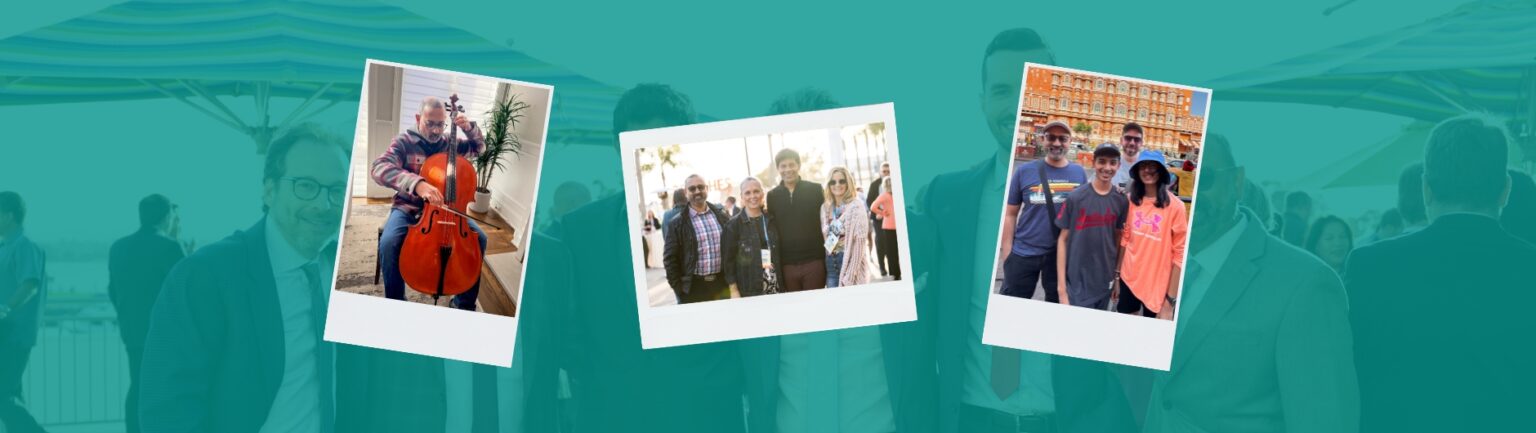
header with 3 different snapshots of Dr. Reddy with his family, colleagues, and playing the cello.

Why RP? A Q&A with Dr. Syam Reddy, Body and Breast Radiologist

Dr. Syam Reddy, National Subspecialty Lead for Body Imaging at Radiology Partners (RP), discusses RP’s focus on delivering quality care and enhancing patient and client experiences while leading innovation in AI and technology.

Dr. Syam Reddy is the National Subspecialty Lead (NSL) for Body Imaging at RP. A body and breast radiologist and practice president at RP Chicago, he and his practice joined RP in 2014. He is the clinical chair at UChicago Medicine Ingalls Memorial and a member of several physician support boards, as well as a facilitator for coaching circles. He holds memberships in the Chicago Radiologic Society, Breast Imaging American College of Radiology (ACR) Data Science Institute, ACR CT colonoscopy committee, the ACR HR Commission, Society of Cardiovascular CT (SCCT) and Society of Cardiovascular MR (SCMR). Outside of work, Dr. Reddy enjoys spending time with family – traveling, playing tennis with his kids, and learning the cello.

We talked to Dr. Reddy about his role with RP’s Clinical Value Team as NSL for Body Imaging, RP’s commitment to quality and innovation, the role of collaboration and AI in advancing subspecialty practice, and his excitement about leveraging imaging technology like MosaicOS™.

What inspired you to be a radiologist?

The biggest reason is my mom was a radiologist. Towards the end of her career, teleradiology was becoming more common. She had this monstrous screen she would have to bring home, and I saw her read these head CTs that took forever to load. That inspired me to see the mix of computers and medicine and how they meld together to help the patient. The more I learned about it, I was drawn to the fact that it’s almost like looking at artwork, trying to decipher what’s going on and putting all the pieces together – you’re a little bit of a detective, too. I also like my hands in a little bit of everything, and I found radiology to be a field that really covers all the specialties to a great extent.

What drew you to body imaging as a subspecialty?

I like body imaging because it’s so integrated with everything – from ER to developing subspecialties. I also got involved with breast imaging quite a bit, so those are the two areas I focused on. I really enjoy learning, and in radiology, there are always new updates, information and trials.

Talk about your decision to join RP.

Our group was one of the earliest groups to join RP, way back in 2014. At the time, we were a fairly large group, with about 100 radiologists across four or five states. Our group landed with RP because of their focus on quality. RP’s mission to transform radiology includes improving quality, patient experience and client-side experience, which drew our attention. That’s exactly what we wanted. Being a physician who can be integrated and involved with that process is really meaningful.

Talk about the change and growth you’ve seen within RP since you joined in 2014.

Looking back, I think RP has positioned itself as a practice that’s ahead of the curve in several ways. We’re the ones helping the rural areas that can’t get help. We’re working with reimbursement issues to ensure physicians are getting reimbursed properly to maintain their practices. And we’re the practice that’s ahead of the curve when it comes to AI and technology. I see a lot of vendors coming out, but I don’t know how many are radiology-driven with the input that we have and the speed at which we are progressing. All of those really speak volumes about what we are doing, what we have done and where we’re going.

What was your path to serving on our Clinical Value Team as the National Subspecialty Lead (NSL) for Body Imaging?

I started out being on the subspecialty advisory board. After a couple years, our previous NSL decided to explore other opportunities and asked me if I wanted to get involved. I thought it was a good way to get further into the subspecialty. I was nervous at first, but it was fun to jump in and meet everybody in the body imaging group. I’ve really enjoyed meeting other people in the practice and seeing all the things that we’ve developed over the years. I think there’s so much more potential – just the vastness of radiology really needs guidance for all these subspecialty exams that we do. There’s so much information out there.

What has been the most rewarding aspect of your NSL work?

I think sometimes we can get somewhat siloed, even within our own groups. When we come together in our advisory boards and discuss topics like trauma, we’re all on the same page. Those conversations give us the chance to say, “We do that too,” “This is how we do it,” “This is a great idea,” or “Maybe we can tweak it this way.” That sharing of ideas is so powerful. It’s great knowing there are so many resources out there and different ways to connect with people. And then there’s the challenge of pulling information together in a concise way. There are so many books and articles, so you have to dig through information. We need to get to a point where everything is very concise and easy to access, because that’s the way of the future.

Talk about the “Rad to Rad” peer learning program. What is it and what’s the goal of it?

When we think of our residents and fellows, a lot of information today is short-form – quick snippets like a one- or two-minute video on YouTube or a one-pager. With that in mind, we created the “Rad to Rad” peer learning program. It’s simple: share a couple of images from an important case and highlight the most valuable points. It’s super easy, super quick and very high yield. That’s the kind of content people are seeing on social media when it comes to radiology cases. Our hope is that it draws the attention of residents and fellows – and also keeps all of us engaged. We’re all busy, but if we can take a minute or two to see a case that boosts our confidence or helps avoid a mistake, it’s worth it.

How do you and the Clinical Value Team come together to create “Rad to Rad” learnings?

All of us are exposed to different cases in our practice, and some of them stand out. For example, maybe it was a miss, or maybe it was a great catch. I think most of us have a process where we document that, whether it’s a teaching case or something else, and we’re all very passionate about our desire to showcase our subspecialty. Those are the kind of cases we present to each other in our board meeting when we’re working on this. It’s kind of a working meeting; we’ll share the case, and then people will bring up some pointers, verify if it looks accurate, etc. Being able to create that is rewarding by itself.

Why is a team like the Clinical Value Team so integral to the rapid technology changes?

We’re all racing to get our work done, but we need someone to pause and make sure we’re running in the right direction. Sometimes speed without guardrails or guidance can lead to chaos pretty quickly. RP’s Clinical Value Team provides a forum that allows us to still move fast, but in the right direction, and ensure we’re doing it safely for our patients and the radiologists. That is so important. Our radiology societies play a similar role by ensuring new information and literature reach radiologists, so the quality of practice is always improving. Medicine is changing so quickly, and so is technology.

How would you define a successful future?

It seems like there’s this ever-growing gap between the volumes of work and the supply of radiologists. One of the things we’re focusing on is AI and how we can integrate it with radiologists to improve the whole process. To me, success would be all of that coming to fruition: leveraging AI while maintaining our quality and improving patient care. If we’re able to see all those things happen, that’s true success – no question.

You are an early user of Mosaic Clinical Technologies™. What has your experience been so far?

My background is in biomedical engineering, and the biggest decision I had to make was whether to go into computers or medicine. The reason I didn’t go into computers is that I tend to obsess about trying to get things right. That’s why I enjoy working with MosaicOS™ – I like creating and understanding. It’s very early, but the concept of telling AI to handle tasks like calculating volumes or percent changes is just incredible. I used to do all of that manually with a calculator. What I really want to know is how far I can push the envelope. There are people who know more than I do, and I’m excited to learn from them. I think we’re headed in the right direction, and it’s going to be pretty amazing.

How would you like AI to help support your specialty?

I’ve always felt the purpose of RP’s Clinical Value Team is to make it easier to practice in our subspecialty: being faster, more efficient and with high-quality content. As we become more subspecialized, our subspecialized referrers expect very specific content. If we can increase everyone’s skill set in that way, then I think we’re successful. There’s a shortage of body imaging radiologists and breast imaging radiologists; how do we use AI and the clinical value we provide to decrease the gap while increasing the number of people who are able to perform?

Dr. Syam Reddy earned his medical degree from the University of Illinois Medical Center in Chicago; completed his residency at Sparrow Health System; and completed his fellowship in body MRI imaging at Baylor College of Medicine in Houston.

Radiology Partners, through its owned and affiliated practices, is a leading physician-led and physician-owned radiology practice in the U.S. Learn more about our mission, values and practice principles at RadPartners.com. For the latest news from RP, follow along on our blog and on XLinkedIn, Instagram and  YouTube. Interested in learning about career opportunities? Visit our careers page.
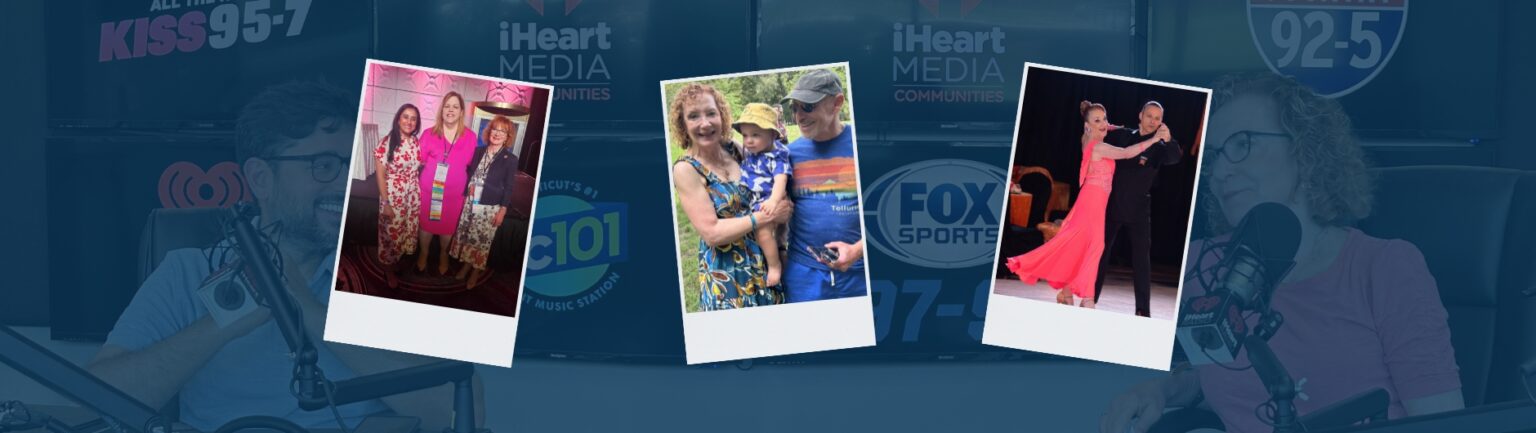

header with 3 different snapshots of Dr. Weigert; one of her posing with two other women, one of her holding a young boy, and the last of her dancing with her partner.

Why RP? A Q&A with Dr. Jean Weigert, Breast Radiologist

In honor of Breast Cancer Awareness Month, we spoke with Dr. Jean Weigert about the path that led her to become a breast radiologist, advocate for dense breast legislation and champion patient-centered care through decades of innovation.

Dr. Jean Weigert is a breast radiologist and breast imaging section chief at Jefferson Radiology, a Radiology Partners (RP)-affiliated practice. A Fellow of the American College of Radiology (FACR) and the Society of Breast Imaging (FSBI), she joined RP in 2017. Outside of work, Dr. Weigert’s passions include singing and ballroom dancing.

We talked to Dr. Weigert about her experience in the continually transforming field of breast imaging, her part in passing legislature in her home state of Connecticut and how the role of women has changed drastically in medicine.

What inspired you to be a radiologist?

I went to medical school in the late 1970s, when medicine still had quotas for women. Only about 20% of the class could be female. Most of us assumed we’d go into fields like pediatrics, OB-GYN or internal medicine. We didn’t think about surgery or what was then the “esoteric” field of radiology. I originally planned to pursue OB-GYN and took several electives, including one in radiology. During that rotation, I realized I could see anatomy in three dimensions. Not everyone can do that. The radiologists would show us images, and I could immediately recognize the structures. Everyone else was asking, “What are you seeing?”

Looking back, I think a lot of that came from my upbringing. I was raised in a very artistic home. My father was a physician who also painted, and we spent a lot of time in art museums. To me, the human body is beautiful, inside and out. Radiology let me appreciate it in a truly unique way. Unlike most people at the time, I went directly into radiology. I did a rotating internship and was fortunate to be accepted to some of the top residencies. I chose Columbia, and it was the right fit; their radiology department was excellent, and the experience shaped the rest of my career.

How did you become a breast radiologist?

Back when I trained, “breast imaging” didn’t really exist. But during my abdominal imaging fellowship, I started spending more time in gynecologic imaging and with early mammography, which was still developing in the early 1980s. At that time, mammograms were done on standard X-ray machines, often for women who already had a suspicious lump, as there was no screening yet.

After my training, I moved to Connecticut for my husband’s job. It was very hard to find a radiology position, especially as a woman. Ironically, I was hired by a group opening a mammography center, mainly because I was a woman and they thought it would be good for public relations. Reverse discrimination? Maybe. But I took the opportunity and ran with it, and that’s how I carved out a niche in breast imaging. I started teaching residents at the University of Connecticut once a month, hauling in my mammograms in a bag. They called me the “bag lady.” Over time, I built a reputation as a women’s imager, doing research, lecturing and growing the practice in ways no one else was really doing.

What was mammography like for women in the 1980s?

It was a very different world. Women typically came in because they felt a lump. Cancers were larger and often already metastatic. We didn’t have minimally invasive biopsies; surgeons would remove large pieces of tissue. If the pathology came back as cancer, the woman would often wake up having had a mastectomy. Lumpectomies weren’t a thing yet. We’ve come a long way, but even today, we still see too many advanced cancers. We all hoped we’d catch every cancer early – under 1 cm – but that’s not always the case. Still, with the tools we have now, we can detect more cancers earlier than ever before.

What do you wish more women knew about breast health today?

That they have power and control over their health. I say this to patients all the time: “You know your body better than anyone. If something doesn’t feel right, don’t ignore it.” Even if it turns out to be nothing, that’s still a win. We’re also seeing a troubling trend, with more aggressive breast cancers in younger women. I’ve seen women in their 20s with invasive disease. Since screening usually starts at 40, these cancers are often only found because the patient noticed a lump. That’s why self-awareness and risk-based screening are so important.

Speaking of guideline, what should women understand beyond “get a mammogram at 40”?

Guidelines are just that – guidelines. If you have a first-degree relative with breast cancer, you should start screening 10 years earlier than their age at diagnosis. And now we have genetic risk models and tools to assess a woman’s lifetime risk. But I also remind patients: “Don’t say you’re not at risk just because you have no family history. If you have breasts, you’re at risk.”

What innovations have transformed breast imaging during your career?

When I started, mammograms were done on film and developed in dark rooms. Fast-forward to today, and we have:

  • Digital mammography, which allows real-time manipulation of images.
  • Tomosynthesis (3D mammography), which gives us millimeter-thin slices of breast tissue—like a CT scan of the breast.
  • Advanced ultrasound, which can evaluate vascularity and tissue characteristics.
  • MRI, now a powerful tool for high-risk women, with sequences that reveal solid vs. cystic lesions and vascular kinetics.
  • Contrast-enhanced mammography and molecular imaging, which give us insight into metabolic activity—cancers are often hypermetabolic.
  • AI, which helps us assess density, flag subtle findings and improve accuracy.

We’ve gone from “how did we even find cancers back then?” to having an array of incredible tools today. The challenge now is interpreting all that data responsibly and minimizing unnecessary biopsies while still catching early, aggressive cancers.

You played a role in passing Connecticut’s dense breast legislation. Can you tell us more about that?

In 2005, Connecticut passed a little-known law allowing ultrasounds for women with dense breasts, but no one was using it. Then a close colleague of mine was diagnosed with Stage III breast cancer shortly after receiving a “normal” mammogram. Her breasts were dense, and the mammogram had missed it. She became a tireless advocate. Together with the Connecticut Radiology Society, we lobbied to make breast density reporting and supplemental screening the standard. In 2009, Governor Rell, herself a survivor, signed the first dense breast law in the U.S.

I also led some of the earliest studies on screening ultrasound, publishing papers that showed we could detect an additional 3–4 cancers per 1,000 women. That’s huge. Now, 38 states have laws, and as of September 2024, every woman in the U.S. must be notified of her breast density on her mammogram results.

What’s been the most meaningful part of working with patients?

It’s the human part of radiology. When I can tell a woman, “This looks totally fine,” and she hugs me in relief—it’s amazing. When I have to tell a patient we need a biopsy, I’m honest and compassionate. I say, “I’ve been doing this long enough to know that when I don’t know what something is, I need to find out.” Then I lay out the plan. Patients appreciate that clarity.

You’re now part of Jefferson Radiology and RP. How has that experience been?

What drew me to Jefferson Radiology was their subspecialty model, where I could focus on what I do best. The volume, the team and the technology elevated my skills. Honestly, it felt like a mini fellowship. I learned so much from my colleagues. Radiology has changed drastically over my career and so has the role of women in medicine.

As part of RP, I’ve gotten to participate in exciting national projects, like research on breast calcifications. That level of collaboration didn’t happen in my smaller group before. I also appreciate RP’s openness to innovation and the fact that they’ve created a platform for clinical voices like mine to be heard.

What honors have shaped your career?

In 2008, I became a Fellow of the American College of Radiology (FACR) an honor given to only 10% of radiologists, and even fewer women at the time. I was also appointed chair of the ACR Accreditation Committee for Mammography and continue to serve as a senior reviewer for MQSA.

In 2020, I was honored to become a Fellow of the Society of Breast Imaging (FSBI). Most SBI fellows are academics with dozens of publications. I’ve always been a clinician, a “closet academic.” They actually adjusted the criteria to allow recognition of clinical excellence—and I was the first to be awarded through that path.

How do you spend your time outside of medicine?

I have five daughters—two of my own and three stepdaughters—and seven grandchildren. I’m not the “babysitting grandma,” but I’m very involved. Some of my daughters now get mammograms, and I’m proud they take their health seriously—even if they sometimes forget to tell me!

Outside of family, I have two big passions: singing and competitive ballroom dancing. I’ve been dancing for 30 years. It’s great for my body and my brain and it forces me to let someone else lead, which isn’t easy for me! I also love history and genealogy. I come from a long line of scientists and physicians, including a Nobel Prize winner, in some ways, this path was always part of my DNA.

Dr. Jean Weigert earned her medical degree from State University of New York Upstate Medical Center, and she completed both her fellowship in abdominal imaging and residency in diagnostic radiology at Columbia-Presbyterian Medical Center.

Radiology Partners, through its owned and affiliated practices, is a leading physician-led and physician-owned radiology practice in the U.S. Learn more about our mission, values and practice principles at RadPartners.com. For the latest news from RP, follow along on our blog and on XLinkedIn, Instagram and  YouTube. Interested in learning about career opportunities? Visit our careers page.
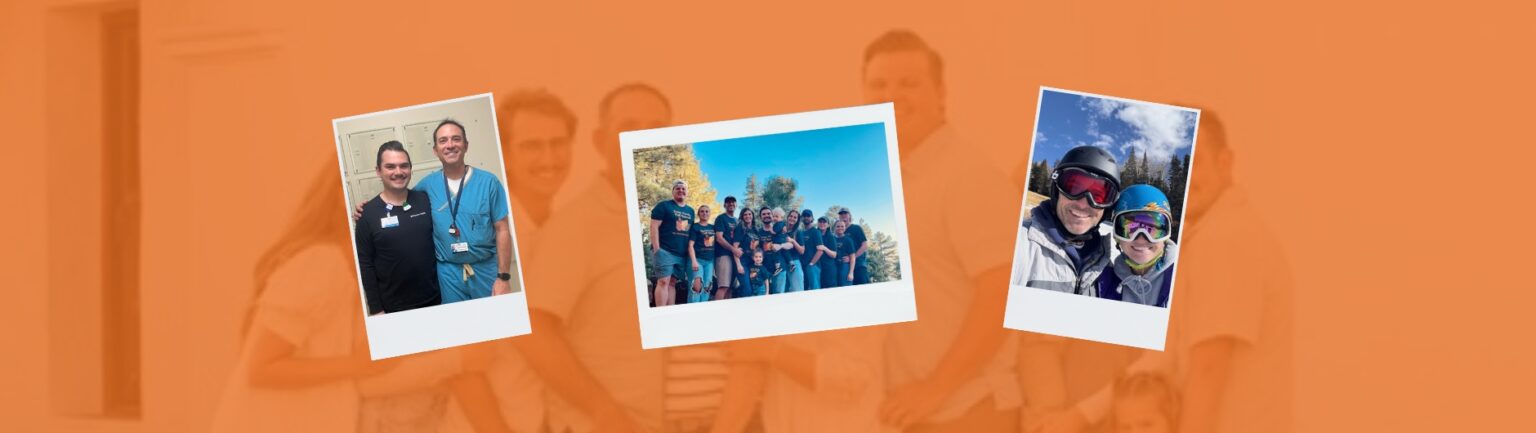

=""

Why RP? A Q&A with Chris Davis, National Subspecialty Lead, Advanced Practice Providers

Chris Davis, National Subspecialty Lead for Advanced Practice Providers (APPs) at Radiology Partners (RP), discusses his journey and insights as a physician assistant (PA) specializing in interventional radiology, the unique roles and growth opportunities within the field and the support provided by RP.

Chris Davis, DMSc, PA-C, RT, is a PA in interventional radiology for RP Phoenix in Mesa, Arizona, where he also serves as adjunct faculty and preceptor for PA programs in the region. He is a fellow member of the American Academy of Physician Assistants and has served as a clinical associate member of the Society of Interventional Radiology, as well as past president of the Arizona State Association of Physician Assistants. He joined RP in 2007. Outside of work, he enjoys cycling, running and spending time with family.

We talked to Chris about his path to being a PA and how RP’s nationwide network, local adaptability and strong support for APPs allow him to make meaningful clinical and educational impacts.

Tell us why you wanted to pursue a career as a physician assistant?

While finishing my bachelor’s degree in biology at the University of Utah, I realized I didn’t want to be a biology teacher and needed a career that could support a family. Medical school was in the back of my mind, but I also wanted kids, and balancing school with parenting was going to be challenging. That’s when I discovered the PA profession. At the time, prior medical experience was strongly emphasized. We were living in Utah, and I found an affordable two-year X-ray tech program. I jumped in, gained hands-on experience and continued the PA path. After X-ray school, I worked for a couple years as an X-ray tech while applying to PA programs. Once I completed PA school, I found combining the medical knowledge from PA training with the imaging and positioning skills from RT school was the perfect blend. To me, it’s the best of both worlds.

What drew you to interventional radiology?

The interventional radiology component is a natural pathway for PAs who want to practice in radiology. I found most PAs who want to practice in radiology are hands-on; they’re the doers and the ones who get things done. And that’s me. As a PA in interventional radiology, you get to interact with the patients and help solve the problem. For example, if they’ve got a swollen knee or fluid around their belly, you get to help be part of solving the issue.

What’s fulfilling about working as an APP for RP?

Serving as National Subspecialty Lead for APPs at RP has been very fulfilling. It’s incredibly rewarding to look across the practice and help identify where APPs can make a meaningful impact – not just in enhancing the patient care experience but also in supporting our physician colleagues so they can have better experiences.

What are some unique features RP offers that are hard to find elsewhere?

It’s the nationwide scope. I’m involved in a few PA and nurse practitioner groups online, and I see great questions being asked. But often, those folks are in smaller practices without the internal network to turn to and say, “Hey, how do I do this?” or “I’m having this challenge – how do I solve this concern?” At RP, we have a large network of APPs across the country, which means we’ve seen the full range of challenges faced by APPs working in radiology, whether it’s fluoroscopy privileges or prescribing rights. We’ve already worked the problem, or we have other APPs in different states who have encountered it and can say “Here’s what I did when I was having that issue.” It’s that nationwide strength within RP that really is impressive. And yet, we still know each other – it feels personal. Sitting on the national council and the Clinical Value Team, we’re across the country and in different specialties, but in our monthly meetings, I’m just a regular guy. That’s pretty awesome.

Tell us more about your role as an educator and how that relates to your role as a National Subspecialty Lead for RP?

What’s interesting is when I started as a PA in radiology back in 2007, there were maybe seven or eight of us in the entire state of Arizona. Now I think we’re up to around 20. We’ve seen the profession grow, but it’s still pretty small. Because of that, we’re frequently asked to take students – and when they rotate with us, they start to see that this is a viable career path. It’s hands-on, and there’s a little bit of autonomy, because when you’re in the procedure, you’re the one making decisions. They are really drawn to that idea. I’ve had the opportunity to spread the gospel of IR to PAs and nurse practitioners here in the Phoenix Valley through teaching. Watching students come in for their four- to six-week rotations –initially overwhelmed by the technology, the imaging, the ultrasound machines – and then seeing that shift by the end, when they realize, “Hey, I can do this,” is incredibly gratifying. They go from intimidated to confident, hitting small lesions with precision. It’s about growing the profession, mentoring the next generation and showing them what’s possible in radiology. It’s fulfilling to help shape that journey both locally and nationally.

You’ve worked as a PA in radiology for 18 years. How has the field evolved, and what does the future look like to you? How will RP contribute to that?

There are a couple of things. First, the scope of what APPs can do in radiology has broadened. We’ve seen procedures where, once an APP gets a hold of it and is confident and skilled, they can take on that responsibility and relieve some of the burden from radiologists. That leads to greater efficiency, which is a huge benefit for RP overall—especially as we face a narrowing pipeline for both interventional and general radiologists. APPs can absolutely help fill that role. I suspect we’re going to see more APPs working in radiology, and that scope will continue to fulfill the needs of individual practices. What’s interesting about RP is, because it’s locally led, APPs can adapt to what the local practice needs. For example, here in the Phoenix area, our East Valley practice looks different from the West Valley—and that’s okay, because we’re able to adapt to the local needs of each group. This is similar in other places like North Carolina, Florida or Texas, where more clinical rounding is done. That’s just what the practice needs, and APPs are stepping up to meet those demands. That flexibility and responsiveness are what make the APP role so valuable within RP.

What are some common misconceptions about your work as a PA?

Many people don’t really understand what a PA is. The title “physician assistant” is starting to trend toward “physician associate.” That’s probably the biggest misconception. Another thing people don’t realize is radiology is a specialty. It’s a narrow one, but we touch every other specialty – neuro, ortho, you name it. Still, our touchpoints are limited, so when I say I’m a PA in radiology, people assume I work in a doctor’s office or maybe an ER, or they think I’m a radiologist or an X-ray tech. And yes, I’ve been an X-ray tech, but that’s not what I do every day. When people ask what I actually do, I give them this elevator pitch: I use an ultrasound machine, an X-ray machine or a CT machine to put a needle, a line or a tube somewhere in your body. And I always add: You never want to meet me professionally.

Chris Davis completed a radiologic technology (RT) program prior to completing a Master of Physician Assistant Studies (MPAS) at A.T. Still University, Arizona School of Health Science, in Mesa Arizona, where he also completed a Doctor of Medical Science (DMSc) with an emphasis in healthcare leadership.

Radiology Partners, through its owned and affiliated practices, is a leading physician-led and physician-owned radiology practice in the U.S. Learn more about our mission, values and practice principles at RadPartners.com. For the latest news from RP, follow along on our blog and on XLinkedIn, Instagram and  YouTube. Interested in learning about career opportunities? Visit our careers page.
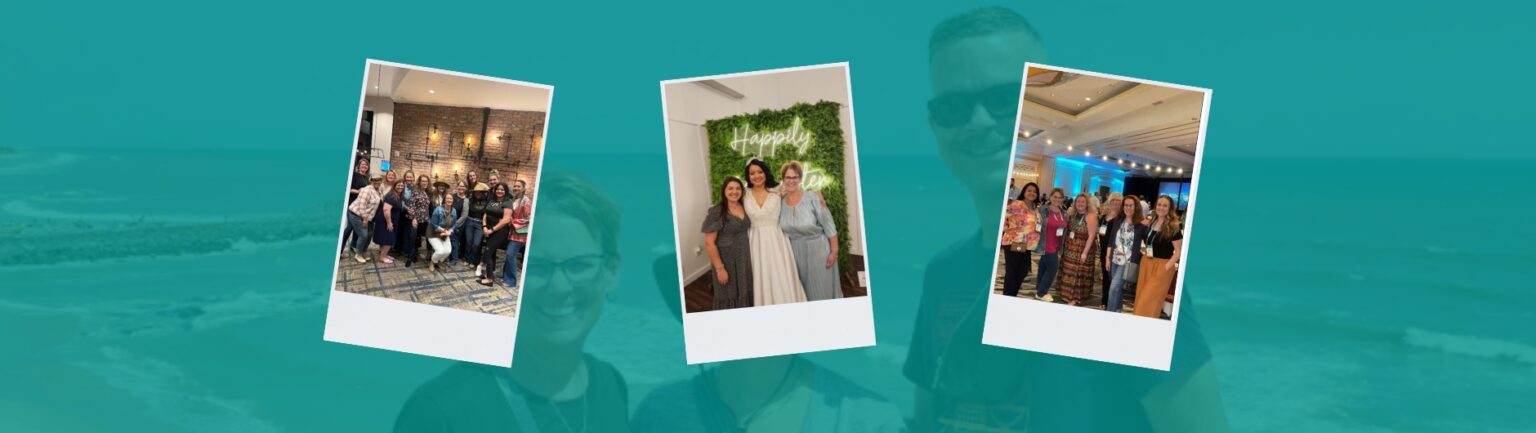

groups of women smiling at different venues.

Why RP? Q&A with Karen Vineyard, AVP, Credentialing, Licensing and Privileging

Karen Vineyard, associate vice president of credentialing, licensing and privileging at Radiology Partners (RP), discusses RP’s supportive and collaborative work culture, where teammates are valued, empowered to drive efficiency improvements and play a vital role in ensuring high-quality patient care through teamwork and continuous innovation.

Karen Vineyard is one of two national leaders directly overseeing credentialing, licensing and privileging at RP. Since joining RP in 2023, she and her team have streamlined RP’s these processes and implemented new systems to improve efficiency in ensuring clinicians are appropriately trained and qualified to provide safe and effective care allowing RP physicians to begin providing radiology care sooner. Outside of work, she enjoys cooking, baking and spending time with her two granddaughters. She and her husband also enjoy traveling and camping throughout the state of Michigan, where they are based

How does your role contribute to the overall practice at RP?

I oversee the processes that ensures RP radiologists are properly credentialed, licensed and privileged. We validate they are trained to provide the services they perform in the hospitals and healthcare facilities RP serves.

How did you get into this role? What’s your background? 

I initially wanted to be a pediatrician, but I became a parent during my second year of medical school and decided to step away from medical school. I started working for an internal medicine residency program in Michigan, and they asked me to help with credentialing paperwork. That’s when I started dabbling in helping figure out what steps residents needed to take to start caring for patients.  

There is not a college program specific to medical staff services or even credentialing, licensing and privileging, rather it’s something you learn from experience. People often relate credentialing, licensing and privileging to a medical secretary, but we’re not secretaries by any means. Our goal is to ensure patients receive high-quality care from the clinicians who are coming into a facility, making our job just as serious. 

How did you connect with RP? 

I met one of my good friends and close colleagues, Shirley Wilson, about 15 years ago. We both worked for the same group, and after she started working for RP, she said, “We have this opening, and if anybody can do this and succeed, it is you. We need you here at RP.” I applied, got connected, interviewed and started in January 2023 – and I’ve been here making an impact ever since.

Talk about the initial ask of what you needed to accomplish and what’s been happening in your first two years at RP?

When I started, the team’s turnaround time to onboard a clinician was almost three times longer than it is now. We created some efficiencies, and within nine months of joining RP, we reduced the turnaround time for onboarding and implemented processes to license clinicians more quickly. I’m proud of the tremendous efforts by our team to make this happen for our radiologists.

What is so impressive to you about your team?

What excites me about the team is their resilience. Credentialing, licensing and privileging can be a thankless job, and it shouldn’t be, because without medical staff professionals, clinicians like radiologists couldn’t provide their services – and we would have more unqualified clinicians who could harm patients. Despite all the changes, our team at RP has shown such resilience, diligence and commitment to quality patient care. They continue to find ways to improve. 

What excites you about the near future of RP? What are some of the things keeping you engaged and driving you forward personally in your role?  

Culture is a priority at RP. Everyone collaborates and treats each other kindly, and we are all centered around our common mission. My team keeps me engaged, because I value them and everything they do. They’re not just “someone who works with me. They’re my family, too. Looking futureforward, we’re creating a new system to continue to improve efficiencies and enable radiologists to read even more quickly. I’m excited to reduce the manual work and use automation so our team can focus on the details and our radiologists can focus on patient care. 

In the future, if you are looking back at your RP career, what would make you say, “This has been a great success?” 

When I look back from when I first started to where we are today, we are turning things around much faster. Looking at where we’re going to be in the next six to 12 months, I’m excited to see those turnaround times come down even more. I’m excited to see our progress and where we’re going.  

Karen Vineyard, CPMSM, CPCS, earned her bachelor’s degree in healthcare administration at National American University. 

Radiology Partners, through its owned and affiliated practices, is a leading physician-led and physician-owned radiology practice in the U.S. Learn more about our mission, values and practice principles at RadPartners.com. For the latest news from RP, follow along on our blog and on XLinkedIn, Instagram and  YouTube. Interested in learning about career opportunities? Visit our careers page.