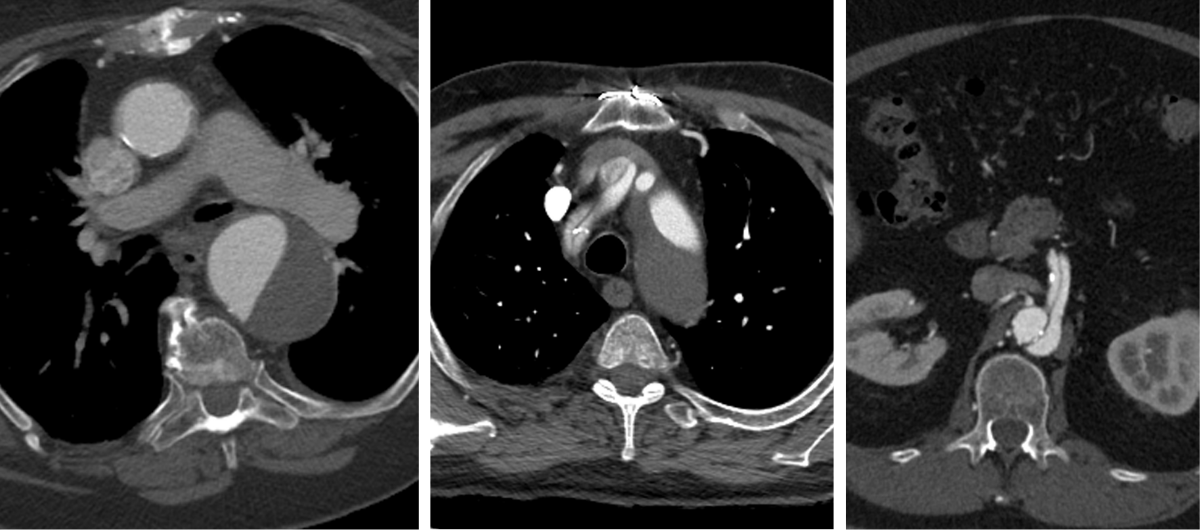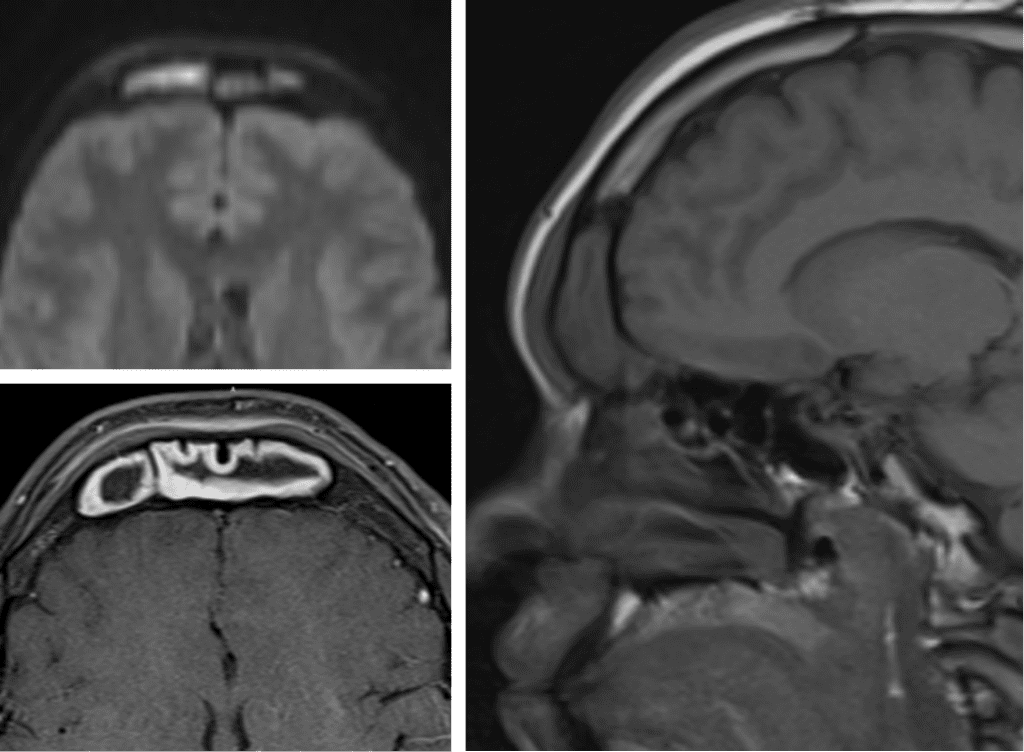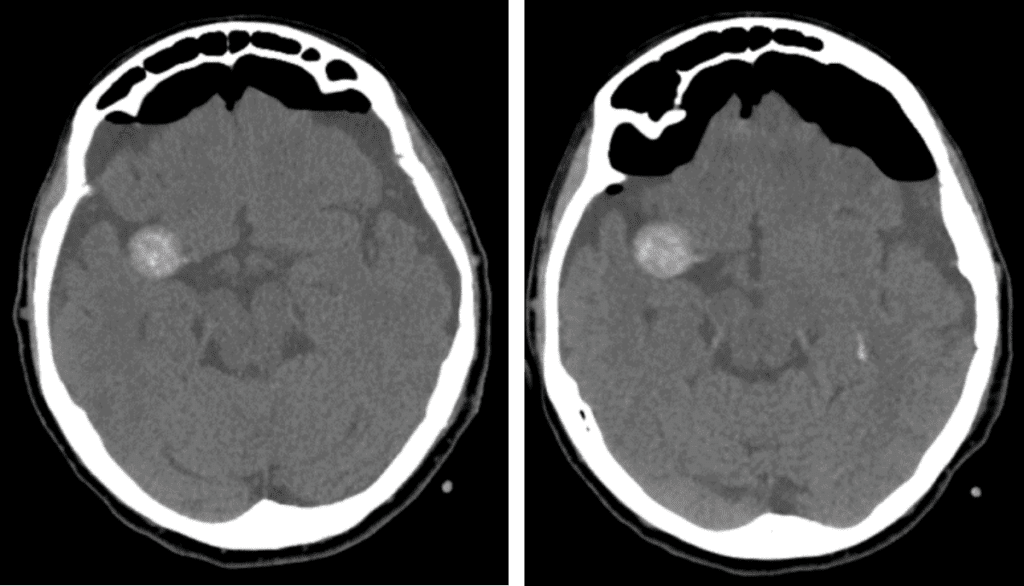
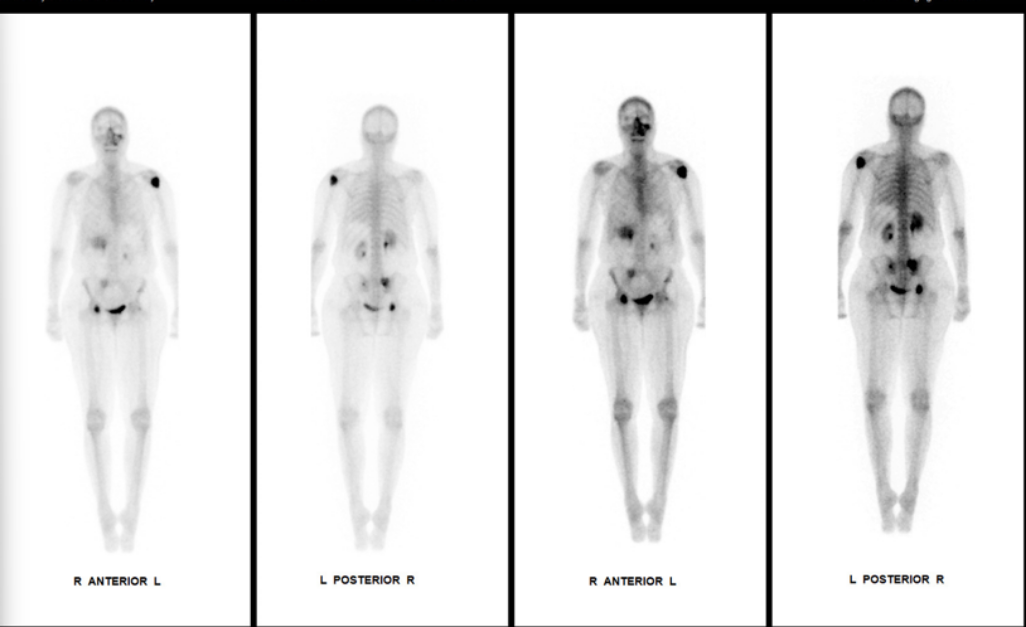
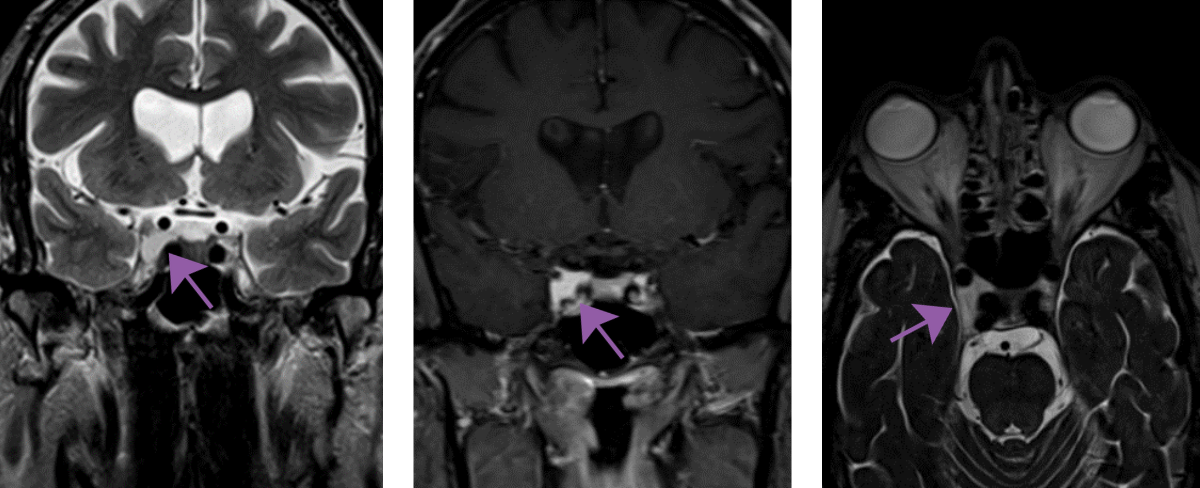
Rad to Rad Learning: Invasive Fungal Sinusitis

The Radiology Partners (RP) Neuroradiology National Subspecialty Division (NSD) presents our newest Rad to Rad Learning case.

Dr. Krishna Nallamshetty

Dr. Krishna Nallamshetty

The Neuroradiology NSD is part of RP’s Clinical Value Team, whichworks to elevate patient care and enhance value through innovation, collaboration and education. To advance this goal, our radiologists and advanced practice providers are committed to sharing peer learning as valuable reminders and insights about what we encounter in our day-to-day practice.

Check back here and on XLinkedIn and Instagram to see these common cases and our findings.Invasive Fungal Sinusitis Neuroradiology Subspecialty DivisionVisit the Clinical Resources page for more cases and to see what we’ve developed to enhance best practice recommendations, elevate image quality and patient care and update current standards throughout RP’s network of practices, all to deliver excellent radiology services to patients, referring clinicians and client partners.
Radiology Partners, through its owned and affiliated practices, is a leading physician-led and physician-owned radiology practice in the U.S. For the latest news from RP, follow us on XLinkedInInstagramYouTube and the blog.Shared to improve patient safety and healthcare delivery in the provision of radiology services. The circumstances and facts are changed, altered, or deidentified to preserve confidentiality. Privileges have not been waived.

Dr. Deistelkam headshot, posing with his wife in nature, and posing with his wife in front of a bridge.

Why RP? Q&A with Dr. Timothy Diestelkamp, Neuroradiologist

Dr. Timothy Diestelkamp, neuroradiologist at Southwest Medical Imaging, discusses how RP’s network of affiliated practices allowed him to find his perfect fit at RP – and how he is enabled to focus on patient care.

Dr. Timothy Diestelkamp is a remote neuroradiologist at Southwest Medical Imaging in Arizona. Outside of work, he and his wife enjoy exploring New York City, where they are based, with their rescue dog, Grace. They also enjoy traveling.

What inspired you to become a radiologist?

In medical school, I originally thought I wanted to go into orthopedics, but I found I was passing out in the operating room, so that was not what I wanted to do at all. The more I looked into radiology and the technology used, I found it interesting. The different applications of physics, a particular interest of mine, made me delve into it, and when I saw the day-to-day practice, I realized this is what I want to do for the rest of my life.

What drew you to your subspecialty?

Neuroradiology was what I found most interesting as a medical student. I found the anatomy to be the most detailed and interesting to learn. Neuroanatomy tends to use a lot of CT and MRI, and I find the imaging exquisite. I wanted to see the pictures to learn what the different structures were, and I enjoyed the more I got involved. In neuroscience in medical school, there’s an exercise called “where is the lesion?” They’ll tell you what the person’s symptoms are, and based on that, you narrow down where you think the problem is in the entire central nervous system or peripheral nervous system. I found that to be an interesting part of neuroradiology. Now, when I’m taking a stroke code and the clinician explains the patient’s symptoms, I’m able to narrow down the areas to look for stroke. I partner with the clinician to play the other half of the detective and tell them if I see anything, which I really enjoy.

Were there any specific experiences or individuals who influenced your decision to pursue this career?

In medical school, a couple radiologists mentored me and allowed me to shadow them. They helped teach me basic things, such as reading a chest x-ray. I was fortunate one of our anatomists was a physician, and he would do the imaging correlate. That’s what really got me interested. I would be doing all my dissection and he’d show what it looked like on CT. He’d say, “This is what that is, this is what happens when it goes wrong, and this is what we see.” It all made sense, and it really drew me in.

How did you connect with RP?

I had heard about RP from training and colleagues, and what initially made me interested was the flexibility and the number of options. I could express to RP what I was looking for in a job, and they were able to find matches close to that. Honestly, a big thing was geography, and being able to look across several practice sites and finding the fit that worked for me and my family was the first piece of the puzzle. RP was able to pull from different practices and say, “We have this, this, this and this; they’re all slightly different, but they all hit your 1,2,3,4,5 on your checklist,” which was great. When you’re applying and already have a choice between your top three options or your requirements are already met, and you get to pick between the details, it made it so RP was the most flexible.

What excites you about RP? What is most fulfilling about working as a radiologist for RP?

What originally excited me was the flexibility. RP has so many different local practices, so I could find what was tailored to me. Now what I’m finding, especially being part of the practice, is that the tailored approach continues, and it’s a lot deeper than I really understood when I was interviewing. We run our local practice and make decisions based on what works for us. It’s individualized to what works for me as a radiologist and what works for the practice I’m involved in. We get to find what works best for us.

What are some of the unique features RP offers that are hard to find elsewhere?

What I’ve been most surprised about is how effective the support teams are. I don’t think I could ever make a request to make my job any easier. The onboarding process was incredibly simple. Now, scheduling, making calls while I’m working, if a study needs something fixed – all of that is so easy. I’m astounded at how easy my minute-to-minute job is when it’s just practicing radiology. Everything else is handled by our support teams. All I’m doing is looking at the images and creating a report, which allows me to be effective, efficient and focused – something I highly value. I have been incredibly impressed by that.

In addition, everyone was conducive to me starting and getting me up to speed: checking in with me, giving me feedback on how I’m doing, telling me the milestones we want and how that’s going, developing a plan, staying in touch, etc. It doesn’t feel like I’m out on an island. I work for a practice in Phoenix, and I live in New York City – so, literally, I live on an island. It would be easy for them to not ever reach out, just expect the work to get done and leave me on my own, but I’ve been impressed with how much, how well and how often they communicate to me. We work together, and even from thousands of miles away, it makes me feel like a team where we’re all right next to each other working together. Also, being part of this team, you’ve got a myriad of people with different expertise, and we can all help each other, which is great.

Now that you are a practicing radiologist at RP, what are some of the misconceptions people might have about our practice?

There are definitely misconceptions. I was initially told “We have a whole crew who finds the doctor you need to talk to, makes your life easy, tracks down the tech to get the correct images sent and does all the legwork, so you can spend your time being the radiologist and making your time efficient.” That was great to hear, but I didn’t necessarily expect it, and now that’s exactly what I have. I had this conception of getting told the pitch or ideal scenario, and I didn’t realize how true that would be to my actual experience. It makes me happy to work here with that kind of support.

What does the future of radiology look like to you? How will RP contribute to creating that future?

Radiology is a prominent part of medicine, while it was traditionally thought of as an auxiliary part of medicine. As a physician, you learn to take your history, do your physical exam, diagnose and treat. Radiology is intertwined between each of those steps and becoming an even more integral part of that entire chain of events. Personally, I think the future of radiology hinges on getting medical schools and medical students to know that radiology is that involved in the continuum of care. Ideally, getting radiology more integrated in medical school curriculum can help people become more familiar and make it more tactile.

Dr. Timothy Diestelkamp completed his medical degree at Rowan University, residency at Westchester Medical Center and fellowship in neuroradiology at Mount Sinai Hospital.

Radiology Partners, through its owned and affiliated practices, is a leading physician-led and physician-owned radiology practice in the U.S. Learn more about our mission, values and practice principles at RadPartners.com. For the latest news from RP, follow along on our blog and on XLinkedIn, Instagram and  YouTube. Interested in learning about career opportunities? Visit our careers page.


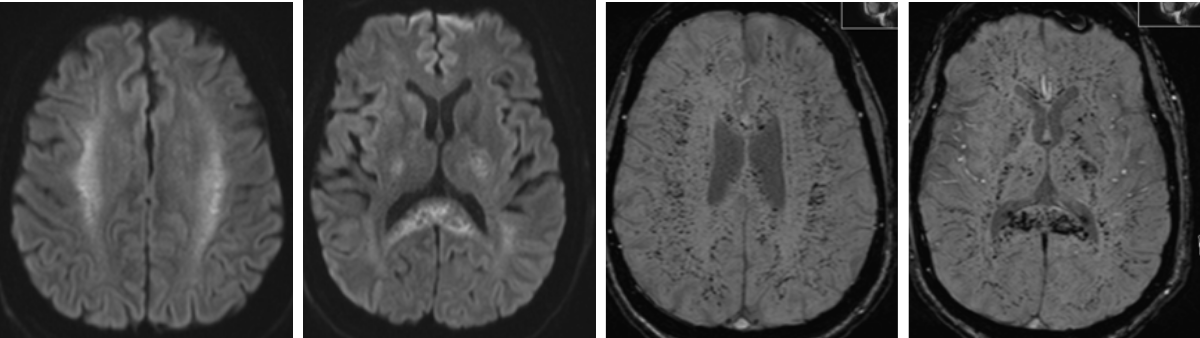
Rad to Rad Learning: Venous Sinus Thrombosis

The Radiology Partners (RP) Neuroradiology National Subspecialty Division (NSD) presents our newest Rad to Rad Learning case.

The Neuroradiology NSD is part of RP’s Clinical Value Team, whichworks to elevate patient care and enhance value through innovation, collaboration and education. To advance this goal, our radiologists and advanced practice providers are committed to sharing peer learning as valuable reminders and insights about what we encounter in our day-to-day practice.

Check back here and on XLinkedIn and Instagram to see these common cases and our findings.Visit the Clinical Resources page for more cases and to see what we’ve developed to enhance best practice recommendations, elevate image quality and patient care and update current standards throughout RP’s network of practices, all to deliver excellent radiology services to patients, referring clinicians and client partners.

Radiology Partners, through its owned and affiliated practices, is a leading physician-led and physician-owned radiology practice in the U.S. For the latest news from RP, follow us on XLinkedInInstagramYouTube and the blog.Shared to improve patient safety and healthcare delivery in the provision of radiology services. The circumstances and facts are changed, altered, or deidentified to preserve confidentiality. Privileges have not been waived.

Why RP? Q&A with Dr. Jennifer Hill, Neuroradiologist

Dr. Arthy Saravanan, associate chief medical officer for recruitment at Radiology Partners (RP), recently spoke with Dr. Jennifer Hill, neuroradiologist and practice president of Renaissance Imaging Medical Associates (RIMA).  

 Dr. Hill discussed the transformative partnership with RP and explored leadership, technology and work-life balance in radiology. Read excerpts from their discussion below and watch an extended version here 

Dr. Saravanan: How did you join RP, and how has your experience been so far?

Dr. Hill: Our practice, RIMA, is based in Los Angeles and has been around for over 20 years. We grew into a sizeable regional practice and, at one point, were the fourth-largest practice in the country. By 2016, we realized we were ready to take our practice to the next level. Even though we were a multi-subspecialty practice, we knew we could benefit from better infrastructure, support and partners. So, we began looking for the right partner and eventually found RP. We joined them in 2018. They shared our same vision, mission and values, so we knew it would be a good fit. Like us, RP believes radiologists should be in key leadership roles in the practice and that patients always come first. 

Can you share your leadership roles and how RP has supported them?

I was named practice president shortly before we found a partner and have continued in that role since then. RP values the local structure, so day-to-day operations have stayed mostly the same, except now, I have a big team supporting me from behind the scenes. One of the things I didn’t realize when I joined RP was the extensive resources available to us. For example, I joined the Clinical Value Team’s neuroradiology advisory board for a couple of years, which was a great opportunity to work with top-notch neuroradiologists from across RP and elevate our neuroradiology services.

Isn’t it amazing how those subspecialty boards work? Before, we didn’t have access to radiologists across the country, and now we can exchange ideas freely. I can send cases to colleagues in the Northeast even though I’m based in Texas. It’s an amazing opportunity.

I think we can become so focused on our regional practices. For example, discussing how to handle code stroke with someone in Texas, likely from your group, is both supportive and informative. This collaborative aspect is a great perk that, I admit, I didn’t fully appreciate when we first joined.

Now that you’ve been with RP for a few years, are there other perks that may have stood out to you during and after the transition?

One thing we were excited about was the access to advanced technology, particularly AI. I know it’s a buzzword, but it’s true. As radiologists, we want to be at the forefront of utilizing that technology. While AI won’t replace us, having access to cutting-edge tools and the expertise of so many smart people with RP helps us lead the way and move forward effectively. That’s been a fantastic benefit.

I’d love to hear about your interests and hobbies outside of work.

Work is a big part of my life. I inherited a bit of a workaholic gene from my father. Medicine is very important to me, but my family and friends are even more so. I’ve found you can always make time for what truly matters. The more time you make for family, friends and working out, the better you can manage stress and stay balanced across all areas of life. For me, staying active is key. I try to work out whenever possible and spend quality time with friends and family. I love hiking and am currently learning to play golf, which is quite challenging. I used to play soccer, and all three of my children are soccer players. My oldest is married to a Brazilian who is an excellent soccer player, and his brother is on Brazil’s national team and is famous worldwide. So, soccer is huge in our house, and having a Brazilian family connection has made it even more exciting.

What is your workout of choice?

Honestly, I’m addicted to Peloton and cycling. I like to run, but my knees are not too happy when I do that. I got really into cycling during COVID. One of my colleagues suggested, “You know, Jen, you need to get a Peloton.” So, I bought one right before the rush hit, and I haven’t gotten off since.

You’re an exemplary leader in your practice and have a busy life outside of work. How do you manage to excel in both areas?

I think it comes down to a can-do attitude. I’m comfortable managing many things at once. However, I focus on being fully present whenever I’m at work or with family or friends. When I’m working out, that’s my time, and I don’t like to be disturbed. Balancing work, family, friends and exercise makes me happy, and finding time for all of them is when I’m most satisfied.

What has been your experience as a female leader in radiology? Do you have any tips or insights on being a woman in this field and how you manage that role?

As a female leader in radiology, I’ve learned the importance of getting involved and finding mentors who appreciate what you bring to the table. You might face some obstacles, but don’t let that discourage you. RP is very supportive. During meetings, make sure to sit at the table and speak up—your perspective is valuable and can make a difference. Over time, you’ll see that your voice matters. So, women, make sure to take your place at the table.

Can you provide an example of how RP has helped promote or enable your female leadership style within the organization?

I was fortunate to have the founder of our practice be very supportive of me, and it was based on my abilities rather than my gender. My 15+ years in that environment made me think this was the norm. However, attending medical executive committee meetings showed me that that’s not the case everywhere. When I first joined RP, I was unsure what to expect. I felt accepted and valued from the start—and I still do. I believe RP is increasingly committed to being inclusive and supportive of women. COVID has significantly impacted work-life balance, bringing it to the forefront not just at RP but globally. We’ve adjusted our schedules and made accommodations that benefit everyone, not just women. RP has supported and encouraged these changes. Additionally, outside of RIMA, RP offers a great wellness and support network for those seeking more or wishing to engage in broader collaborative efforts.

We’re dealing with a physician shortage nationally, and more and more radiologists are complaining of burning out. How do you personally manage burnout?

Working out is my number one through 10. I can always tell when I haven’t worked out enough and need to get back on that bike. Along with exercise, I’ve also started incorporating meditation into my routine, which has been very beneficial. I practice it on my own, though some might prefer group settings. The key is finding that quiet space in whatever way works for you. Sometimes, it’s a hike or a walk around the hill. It’s also important to connect with colleagues, check in on them and have conversations beyond reading cases. Make sure we’re all connecting on a human level, and do not forget to take time for yourself—even if it’s just for a few seconds. Taking those moments is essential.

Dr. Jennifer Hill earned her medical degree from the University of California, Los Angeles (UCLA); completed her residency at UCLA; and completed a fellowship in neuroradiology at UCLA. 

Radiology Partners, through its owned and affiliated practices, is a leading physician-led and physician-owned radiology practice in the U.S. Learn more about our mission, values and practice principles at RadPartners.com. For the latest news from RP, follow along on our blog and on XLinkedIn, Instagram and  YouTube. Interested in learning about career opportunities? Visit our careers page.


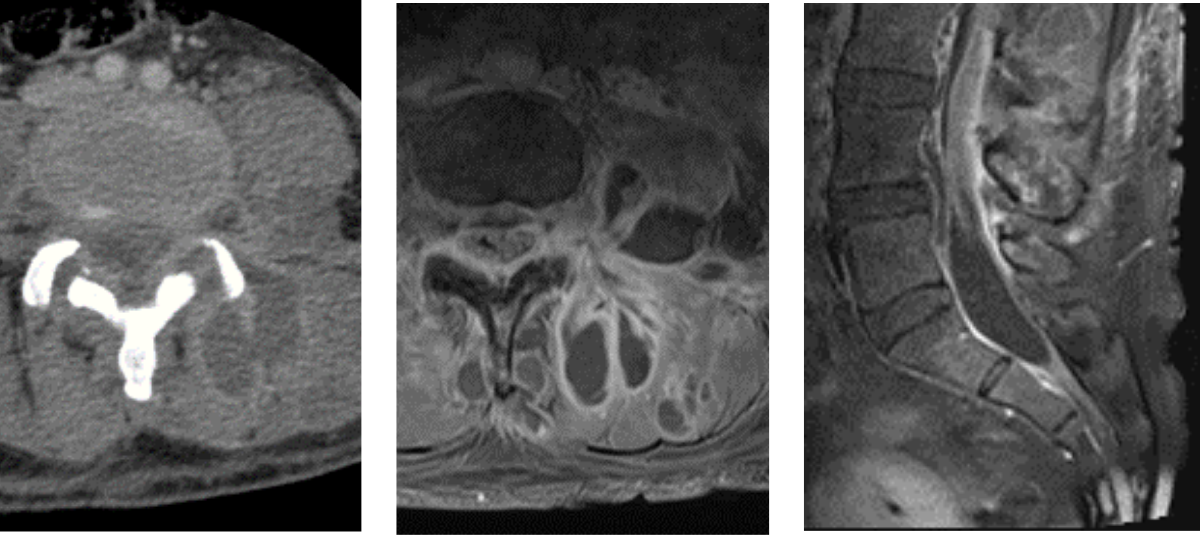
Rad to Rad Learning: Fracture of Ankylosed Spine

RP’s Neuroradiology National Subspecialty Division (NSD) presents our newest Rad to Rad Learning case.

The Neuroradiology NSD is part of RP’s Clinical Value Team, which works to elevate patient care and enhance value through innovation, collaboration and education. To advance this goal, our radiologists and advanced practice providers are committed to sharing peer learning as valuable reminders and insights about what we encounter in our day-to-day practice.

Check back here and on XLinkedIn and Instagram to see these common cases and our findings.Fracture of Ankylosed SpineVisit the Clinical Resources page for more cases and to see what we’ve developed to enhance best practice recommendations, elevate image quality and patient care and update current standards throughout RP’s network of practices, all to deliver excellent radiology services to patients, referring clinicians and client partners.

Radiology Partners, through its owned and affiliated practices, is a leading physician-led and physician-owned radiology practice in the U.S. For the latest news from RP, follow us on XLinkedInInstagramYouTube and the blog.Shared to improve patient safety and healthcare delivery in the provision of radiology services. The circumstances and facts are changed, altered, or deidentified to preserve confidentiality. Privileges have not been waived.

Why RP? Q&A with Dr. Jessica Behringer

Why RP? A Q&A with Dr. Jessica Behringer, Neuroradiologist

Dr. Behringer shares how RP offers technological and staff support, as well as schedule flexibility, that allows her to spend more time focusing on patient care and enjoying work-life balance.

Dr. Jessica Behringer is a neuroradiologist living in Buffalo, N.Y., who reads remotely for hospitals in Florida. Outside of work, she enjoys spending time with her husband and two young children (ages 1 and 3), traveling, trying new restaurants and playing video games. She joined RP in 2023.

We talked to Dr. Behringer about how she connected with RP during residency and ultimately decided to pursue a full-time career in neuroradiology with RP.

Tell us about why you chose radiology. What inspired you to become a radiologist?

Originally, I did not even have radiology on my radar as a third-year medical student. However, I did an elective interventional radiology rotation at a rural hospital in western New York. The rotation was so fun, and the radiologist was a great teacher. His excitement about pathology and anatomy, as well as his passion for caring about each of his patients, inspired me to join the field.

What drew you to neuroradiology?

I found the anatomy and pathology of neuro cases to be challenging and interesting. I wanted to get more experience in that field and have the ability to collaborate with other neuroradiologists on interesting cases. I was once given this advice: choose a fellowship that you find interesting, difficult, or both. Neuroradiology fell into the “both” category for me.

How did you connect with RP?

I originally learned about RP when I was on the interview trail for radiology residency, and I ended up matching with a program at Franciscan Health Olympia Fields, just south of Chicago. That residency program partners with an RP practice. It was a great opportunity for me to be able to experience an RP team while I was still in training and utilize a lot of the tools typically reserved for an attending RP radiologist. After training, those original RP connections helped me to secure my current job.

What excites you about RP? What is most fulfilling about working as a radiologist for RP?

The best part of RP is the people, as corny as it sounds. Even though I am remote, I enjoy collaborating and interacting with my colleagues on a daily basis. It makes the workday much easier when you enjoy the people you interact with. Our support staff helps us bridge the communication gap with technologists and referring clinicians. They are always helpful and friendly. Finally, I can count on my practice directors to promptly answer my concerns and offer flexibility when the need arises. I have two young kids, and I am grateful for the flexibility and support offered by my local practice. With so many radiologists in different subspecialties at my local practice, I’m able to focus on neuroradiology, and if needed, I have a lot of support to back me up.

What are some of the unique features that RP offers that are hard to find elsewhere?

RP provides great support to the radiologist. I can spend much more of my time focusing on patient care and doing a quality job evaluating cases because RP staff is working in the background to help connect me to referring clinicians or following up on incomplete studies. This provides a lot more time for the radiologist to focus on image interpretation.

How has your opinion of RP changed before joining the practice versus being a radiologist at RP?

Since I had the unique position of training with an RP practice, my opinion of RP has always been positive. I have also learned that each RP team is unique after experiencing multiple practices during my training and in my job search.

How has the field of radiology evolved since you first started your career and what does the future of radiology look like to you? How will RP contribute to that?

I’ve only been in practice for two years; however, since I started training, radiology has already changed in many ways. For instance, volumes are steadily increasing, which means radiologists spend less time per study than ever before. Another change to help combat this is the use of AI in radiology imaging and reporting. Since I’ve started at my current RP practice, we have been using AI to help identify brain bleeds, large cerebral vessel occlusions, cervical spine fractures, pulmonary emboli and rib fractures. We have also implemented AI tools that assist the radiologist by creating impressions or recommending the best follow-up for incidental findings. All of these tools are to help the radiologist in their workflow and identify the critical findings. I think RP is ahead of the curve in terms of radiologist utilization of AI.

Dr. Jessica Behringer earned her medical degree from Lake Erie College of Osteopathic Medicine in Greensburg, Pennsylvania; completed her residency at Franciscan Health Olympia Fields in Olympia Fields, Illinois; and completed her fellowship in neuroradiology at Yale New Haven Hospital in New Haven, Connecticut.

Radiology Partners, through its owned and affiliated practices, is a leading physician-led and physician-owned radiology practice in the U.S. Learn more about our mission, values and practice principles at RadPartners.com. For the latest news from RP, follow along on our blog and on XLinkedInInstagram and YouTube. Interested in learning about career opportunities? Visit our careers page.